
The Butter Tourists: Why Travelers Are Flying Overseas for Premium Dairy

Butter and I go way back. Give me a warm baguette and a generous smear of the good stuff, and I'm set for life. Turns out I'm not the only one with this particular obsession: Americans consumed 6.8 pounds of butter per capita in 2024, marking the highest consumption rate in at least five decades.
"I've always been a bit of a butter snob," says Heather McMahan, comedian and host of the Absolutely Not podcast. "Quality butter has always been my thing."
On a recent episode, McMahan recounted smuggling 12 sticks of Parisian butter home in her luggage. That story sent me spiraling into the surprisingly vast world of butter obsession thriving across social media.
The evidence is everywhere you look.
McMahan's butter hauls span Japan, Italy, and beyond, but right now the internet has zeroed in on French butter as the ultimate prize.
Consider the viral clip of a new mother receiving an 11-pound tub of Isigny Ste-Mère as her push present. (Yes, you can order your own bucket.) There are travelers documenting pilgrimages to Saint-Malo, the Brittany town that's become ground zero for European butter production. And then there's the endless stream of tourists gleefully filling shopping baskets with Maison Bordier at Paris's La Grande Épicerie.
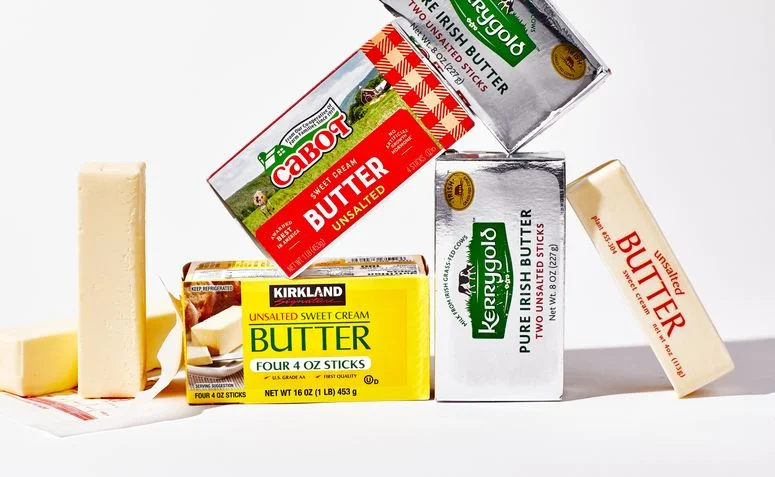
"Butter has become a legitimate travel destination," says Anna Stockwell, author of The Butter Book. "The trend just continues to accelerate."
The butter enthusiasts flooding social media feeds aren't content with standard supermarket options—or even Kerrygold, which Stockwell affectionately calls "gateway butter." Instead, they're hunting down and traveling specifically for premium European varieties.
"It's completely different from anything available in the US," explains Meghan Donovan, founder of En Route to Rêverie, a travel planning agency. Donovan created one of the first viral butter tourism Reels.
The difference comes down to chemistry. US regulations require butter to contain at least 80% butterfat, while European standards mandate 82% minimum. That seemingly small gap makes a significant impact—the additional butterfat dramatically intensifies flavor. European butter is also typically cultured, creating tangy, nutty notes that contrast sharply with the milder profile of American sweet cream butter.
The result? European butter has a richness and depth that makes it almost cheese-like. You could eat it straight, if you were so inclined.
This butter renaissance marks a dramatic shift from the margarine-dominated 1970s, when butter fell out of favor. Stockwell traces butter's decline to flawed 1950s research linking saturated fats to heart disease, followed by the low-fat diet movement of the 1980s.
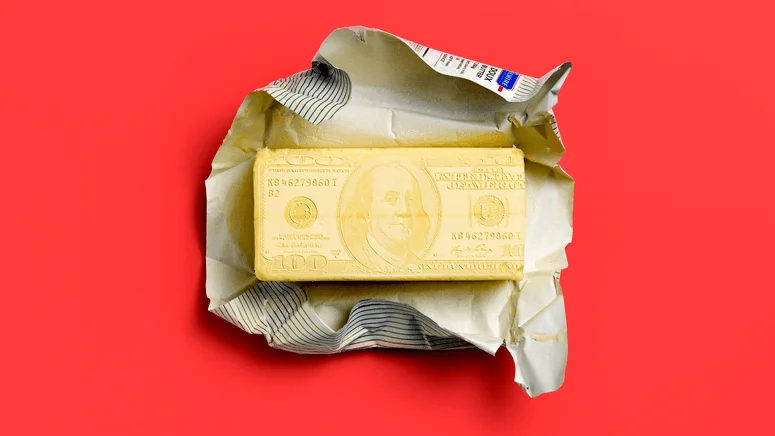
What's fueling butter's comeback beyond its obvious appeal?
Michelle Webb, butter devotee and co-owner of Wedgewood Cheese Bar in Carrboro, North Carolina, offers an economic explanation.
She points to the Lipstick Effect, a documented consumer behavior pattern. "Chanel sells more lipstick during economic uncertainty because customers skip the handbag," Webb explains. She believes people are gravitating toward affordable luxuries—lipstick, and now butter—during periods of financial anxiety.
Dropping $24 on specialty butter at a local shop feels justified. While a spontaneous trip to Paris remains out of reach for most, splurging on exceptional cultured butter is entirely feasible.
"Butter has experienced a complete transformation," Webb observes, noting that only "death, taxes and butter" are guaranteed in life.
For McMahan and Donovan, the motivation is simpler.
"People are recognizing that life is finite," McMahan emphasizes. "Why settle for inferior products when you can have the genuine article?"
"Butter simply makes people happy," Donovan adds.
If you haven't yet experienced the butters generating online buzz, consider yourself warned.
Once you taste Bordier, Les Prés Salés, Rodolphe Le Meunier or Isigny Ste-Mère, there's no going back. Proceed with that awareness, but remember: life's too brief for mediocre butter.
Keep butter refrigerated until departure. Use a ziplock bag or vacuum seal to protect other items if melting occurs. While butter can go in carry-on luggage, TSA may treat melted butter as liquid and confiscate it—solid state is essential.
Aircraft cargo holds maintain climate control, so checked butter typically survives the journey intact. During summer travel, an insulated lunch bag provides extra protection against tarmac heat.