What UMG's Michael Nash Really Thinks About AI and Music Creation: Key Insights From His HumanX Panel With Splice's CEO
2026-04-15 14:42
745 views
UMG executives outlined the company's dual strategy on artificial intelligence: safeguarding artist rights while actively embracing AI-driven innovation — signaling that protection and progress aren't mutually exclusive in the evolving music tech landscape.
UMG's Michael Nash takes aim at 'false narrative of artist replacement' by AI – and 3 other things we learned from his HumanX panel with Splice's CEO
MBW Reacts is a series of analytical commentaries from Music Business Worldwide written in response to major recent entertainment events or news stories. Only MBW+ subscribers have unlimited access to these articles.
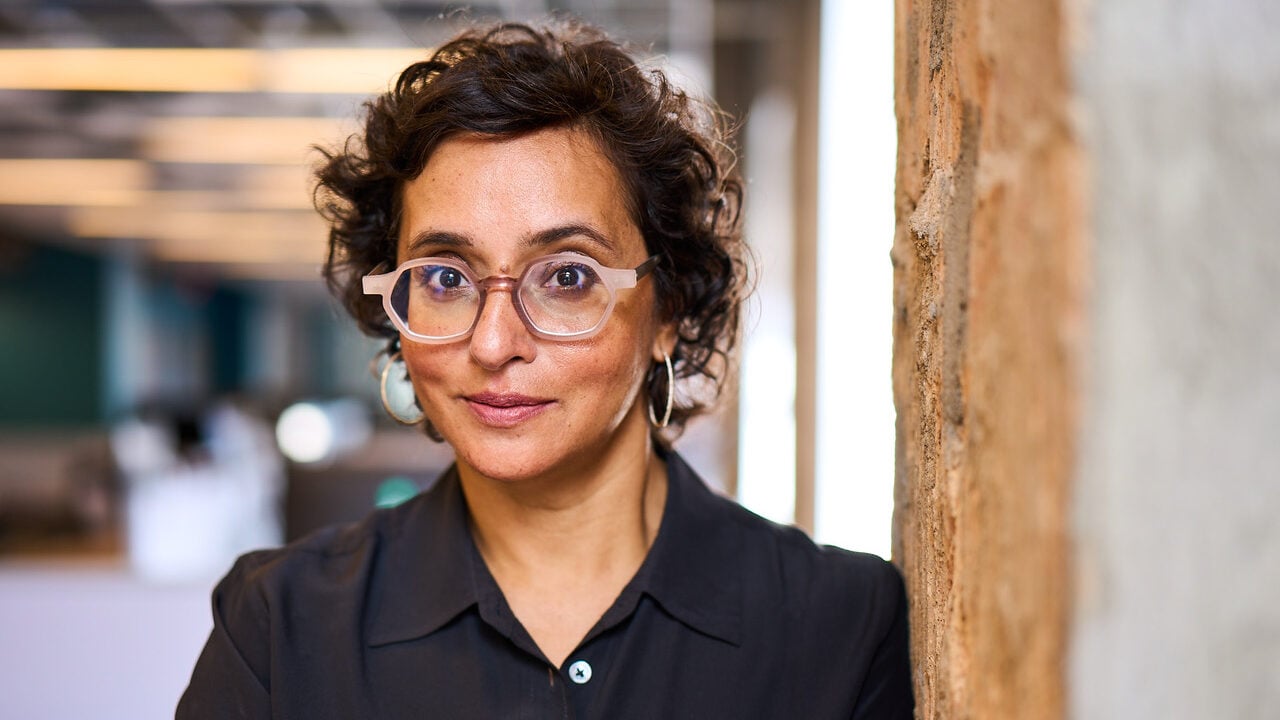
Universal Music Group's EVP and Chief Digital Officer, Michael Nash, joined Splice CEO Kakul Srivastava on stage at the HumanX AI conference in San Francisco last week for a wide-ranging conversation moderated by Trapital's Dan Runcie.
The two executives discussed UMG's broader approach to artificial intelligence and the strategic implications of the recently-announced UMG–Splice partnership, which aims to develop next-generation AI music creation tools.
When asked how UMG reconciles protecting artists' rights with embracing AI innovation, Nash framed the company's posture as turning "defense into offense."
"We have an obligation and a responsibility to defend the rights of our artists, but that's also the key component of organizing a marketplace for ethical entrepreneurs to develop new tools and new experiences working with the artist community," he said.
"As we're fond of saying, if you don't claim a seat at the dinner table, you're likely to wind up on the menu."
Nash also traced a longer arc of UMG-driven business model transformation: from unbundling the album for Apple's iTunes, to helping build Spotify's streaming model, to pioneering UGC licensing on YouTube, to negotiating what he described as a pivotal deal with Meta — one that shifted the platform's relationship with music "from suppressing social expression through music to enabling social expression through music."
"I think it's really incumbent on us to figure out how to take the strong position around protecting the artists' rights and interests as a foundation for business model innovation, to work to organize a marketplace for ethical entrepreneurs," Nash added.
Here are 3 other things you might have missed from the conversation…
1. Nash called the 'AI versus artists' argument a 'false narrative' built on a 'deeply flawed investment thesis'
Nash was unsparing in his critique of what he described as "the false narrative of artist replacement" — a framing he traced back to a specific and, in his view, fatally misconceived investment logic.
That logic, he said, held that "AI eliminates music content supply constraints, kills [the] legacy model, [and] jailbreaks [the] music economy." Nash argued the premise collapsed under basic scrutiny: "The digital transition had already effectively eliminated barriers to entry with 100,000 tracks uploaded a day four years ago."
Reaching for what he called "cocktail napkin math," Nash illustrated the absurdity of an AI-driven content explosion: "In order to listen to all music ever created, you'd have to live 1,700 years and never sleep. And then you'd have to live 17,000 more years for every year that AI models are cranking out new music."
"A nuclear explosion in production volume of content through AI doesn't have a market. There's no audience for that. It's not addressing any kind of need."
The more productive framing, Nash argued, is "Artist x AI" — treating AI not as a replacement for human creativity but as a force multiplier behind it.
"Instead of thinking about going from 1,700 years of content to 17,000 years' worth of content and seeing an order of magnitude explosion in irrelevant content volume, we're looking at it as an order of magnitude advancement in creative potential for artists engaged with technology."
2. Nash asked: would Bob Dylan's music be better if his vocals were perfect?
When the conversation turned to what it actually means for AI music tools to "get better," Nash cut to the heart of the matter with a single provocation.
"Would Bob Dylan's music be better if his vocals were perfect?" he asked. "You could go through a laundry list and version that question for Neil Young or Leonard Cohen or Johnny Cash or Kurt Cobain or Courtney Barnett or Lana Del Rey or Billie Eilish or basically any punk rock record."
"It all relies on the artist and the creative process and their artistic intent."
Michael Nash
Nash drew on poet Robert Creeley, paraphrasing his idea that "art is triumph of content over form," and cited Bono's observation that "we sang before we spoke" — a claim supported by academic research suggesting music predates language itself.
"I think it's technically correct that the music models are getting better [and better]," Nash said. "But to say, does that mean that you're going to see the creation of better music? I think that from a mechanistic point of view, that's the only way you would arrive at the conclusion that yes, you're going to see better music. [Ultimately] it all relies on the artist and the creative process and their artistic intent."
Srivastava echoed that sentiment, arguing that today's AI music creation tools still fall fundamentally short of what artists actually need. "We do not have the right creator tools yet in market that truly allow musicians to tell their stories well, at least in the AI space; we don't have them," she said.
3. NASH PREDICTED 'SIGNIFICANT GROWTH IN THE MUSIC ECONOMY' FROM AI – WHILE SRIVASTAVA SAID WE'LL STOP TALKING ABOUT WHETHER MUSIC 'WAS MADE WITH AI OR NOT'
When asked where AI and music will be in five years, Nash reached for historical precedent to frame the scale of what's coming.
"If you consider what the electronic revolution meant a century ago, and you consider what the digital transition meant at the beginning of this century, 25 years ago, I think that AI is going to represent a paradigmatic change, or paradigmatic transition, in the arts and in music," he said.
"Five years from now, I think you're going to see the beginning of a transition where artists are going to populate intelligent ecosystems with incredible, navigable, hyper-personalized experiences for consumers. You're going to see a significant amplification of creativity and music, and you're going to see significant growth in the music economy as a result."
"No matter how good [AI] gets, the goodness of the music that is created will come from the authenticity of the Creator's narrative coming through."
Kakul Srivastava, Splice
Srivastava took a complementary view, insisting that no matter how capable the technology becomes, the core of what makes music meaningful will remain unchanged.
"No matter how good [AI] gets, the goodness of the music that is created will come from the authenticity of the Creator's narrative coming through," she said.
"Models and agency platforms and all of those things are fantastic, but ultimately, it's the creator tool and how that helps the user tell their story. And I think we're still in the super early innings of that."
Her five-year prediction was striking in its simplicity: AI, she believes, will eventually become invisible — woven so seamlessly into the creative process that the question of its involvement will cease to matter.
"We won't really be talking about whether this music was made with AI or not. It just will be how it's done, just like we don't talk about… 'is this electricity powering these lights?' You can take it for granted, and I think that's what's going to happen with AI and music as well."Music Business Worldwide