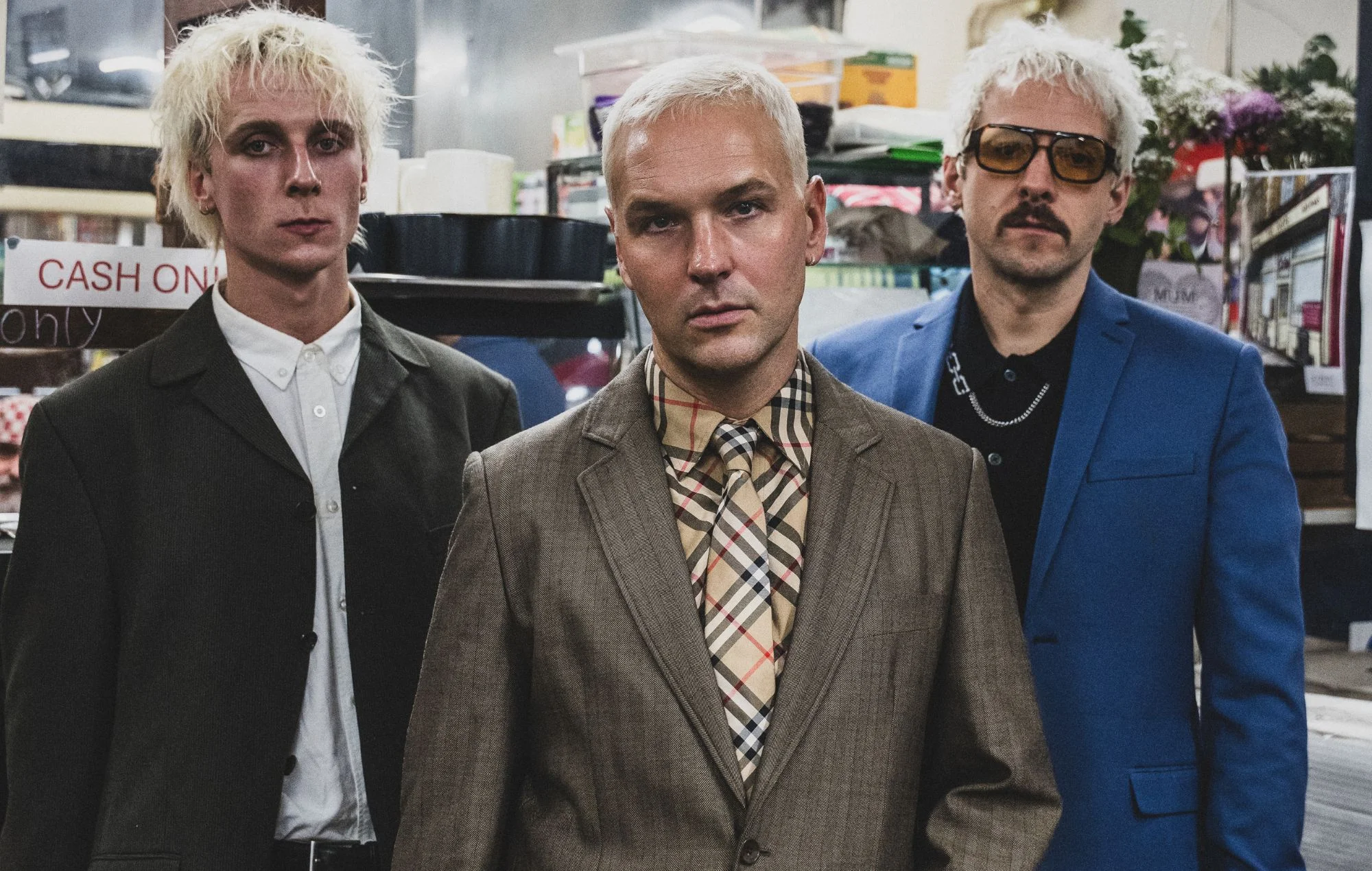
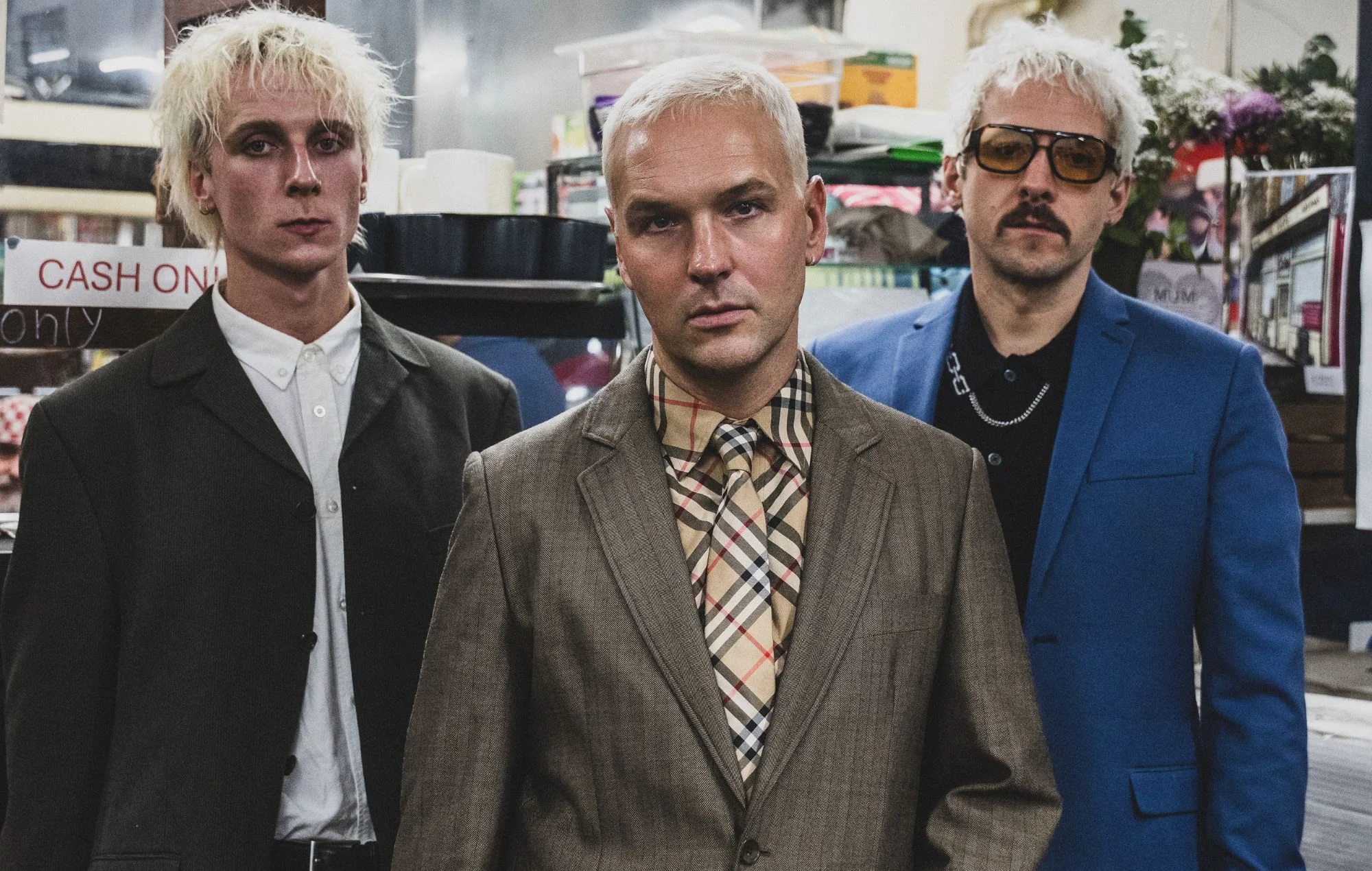
Nearly two decades after one of British panel television's most talked-about walkouts, The Ordinary Boys' Preston has reframed the moment not as a public meltdown, but as an act of personal integrity. Speaking to The Guardian, the frontman says he now views his abrupt exit from a 2007 episode of Never Mind The Buzzcocks as "a proud moment" — and the reasoning he offers cuts deeper than celebrity wounded pride.
What Actually Happened on That Stage
The episode in question has lived on as one of those strange cultural artefacts that the internet won't let die. Host Simon Amstell — then at the peak of his caustic, improvised-feeling form on the show — read aloud from the autobiography of Chantelle Houghton, Preston's then-wife. The passage in question had Houghton expressing genuine excitement about a Daily Mail photoshoot making her "feel really posh and upmarket." Amstell's delivery turned it into a punchline. Preston stood up and walked off set.
At the time, the narrative written around that moment was unambiguous: thin-skinned rock star can't take a joke. Preston himself initially played into that reading, firing back that Amstell was "a snotty little posh boy" who didn't write his own material. By 2009, he was expressing regret. By 2011, he was calling himself "an insufferable arsehole." The arc seemed complete — a minor celebrity who'd had a wobble, reflected on it, and moved on.
What's changed now is the framing, and it's a meaningful shift. "It was actually cruel and classist," Preston told The Guardian. "I really don't know what other choice I had."
The Class Angle Nobody Really Discussed at the Time
This is where Preston's reassessment becomes genuinely interesting beyond the celebrity gossip dimension. The joke Amstell made wasn't really about Houghton's writing style or her media appearances — it was about aspiration itself. That a woman could feel elevated by a mainstream newspaper photoshoot was presented as inherently absurd, the punchline being her earnestness about it.
Panel shows like Never Mind The Buzzcocks occupied a very specific cultural register in mid-2000s Britain: fast, sardonic, comfortable with cruelty, and predominantly populated by privately educated comedians performing a kind of knowing irony that required a certain social footing to pull off. The targets, more often than not, were people who hadn't come from that world. Reality television contestants — especially those from working-class backgrounds who'd found sudden fame — were almost ritual fodder.
Chantelle Houghton had entered public life through Celebrity Big Brother 4 in 2006, cast as the non-celebrity among actual celebrities and tasked with convincing them she was famous. She was warm, unguarded and entirely without the defensive irony that passes for sophistication in certain media circles. That made her, in the context of shows like Buzzcocks, extremely easy to mock. Preston's point — that laughing at someone's genuine excitement about feeling "posh" is a class-based attack dressed as comedy — holds up better in 2025 than it might have in 2007.
A Messier Personal Story Behind the Headlines
What makes Preston's Guardian interview more than a nostalgic revisit is that he doesn't just relitigate Buzzcocks. He provides context that makes the walk-off feel like one moment in a much more chaotic period. He and Houghton married just eight months after meeting on Big Brother, a timeline he attributes to trauma-bonding through an intense shared experience. He was, by his own account, "in a weird space" and on antidepressants during that stretch.
The marriage ended in 2008. That same year, The Ordinary Boys split. Then, in 2017, Preston fell from a balcony — an accident that doctors warned could leave him unable to walk — and subsequently became addicted to OxyContin. The Nuts and Zoo Weekly era he references wasn't a neutral backdrop; it was a media environment that treated public figures as objects of constant, consequence-free commentary. "Preston looks fat today" isn't a satire of tabloid excess — he's describing what was literally being written about him.
His reflection on Liam Payne, who died in October 2024, carries the weight of someone who recognises a parallel trajectory. Preston describes Payne as "a very funny, sweet, kind guy" who was "misunderstood" — and adds, "I saw a lot of him in me, because we both suffered." It's a quietly devastating line, and it contextualises the rest of the interview in a way that makes the walk-off feel almost trivial by comparison.
The Songwriter Years Nobody Talks About
One of the more underreported dimensions of Preston's post-Buzzcocks career is that he didn't disappear — he moved behind the scenes and wrote for artists including Cher, Jessie Ware, Kylie Minogue and the late Liam Payne. That's not a minor footnote. Writing for those names requires craft, professionalism and the ability to subordinate your own voice to serve someone else's. It's a significant rebuke to the "tantrum-prone frontman" caricature.
The songwriting work also reframes the band's comeback. The Ordinary Boys aren't re-emerging from irrelevance — Preston has spent the intervening decade actively working within the industry, just out of the public eye.
What the Comeback Looks Like
The band's return is built on solid ground rather than nostalgia alone. Their new single 'Peer Pressure' — a ska-inflected track that signals a deliberate musical direction — drops this Friday, April 17. They've already played their first live show in over a decade at London's Strongroom, and have support slots confirmed with Madness, plus festival appearances at Victorious and Together Again Festival. Tickets are available here.
Supporting Madness isn't a throwaway booking — it's a curatorial statement. The ska influence in 'Peer Pressure' positions The Ordinary Boys within a lineage rather than simply trying to recapture 2005-era indie. Whether that calculation pays off commercially is secondary to the point that there's clearly intention behind the return, not just opportunity.
The Buzzcocks walkout will probably always follow Preston around — that's how the internet works with moments like this. But the more interesting conversation he's now inviting is about what the British media was doing to people in that era, and what it cost them. That's a story worth telling, and it's one that extends well beyond a single panel show appearance in 2007.
The post The Ordinary Boys' Preston says Simon Amstell's 'Never Mind The Buzzcocks' joke that led to walk-off was "cruel and classist" appeared first on NME.