%20copy.jpg)
Lab-Grown Meat Had a Rocky Start. Chefs Are Still Trying to Make It Work.
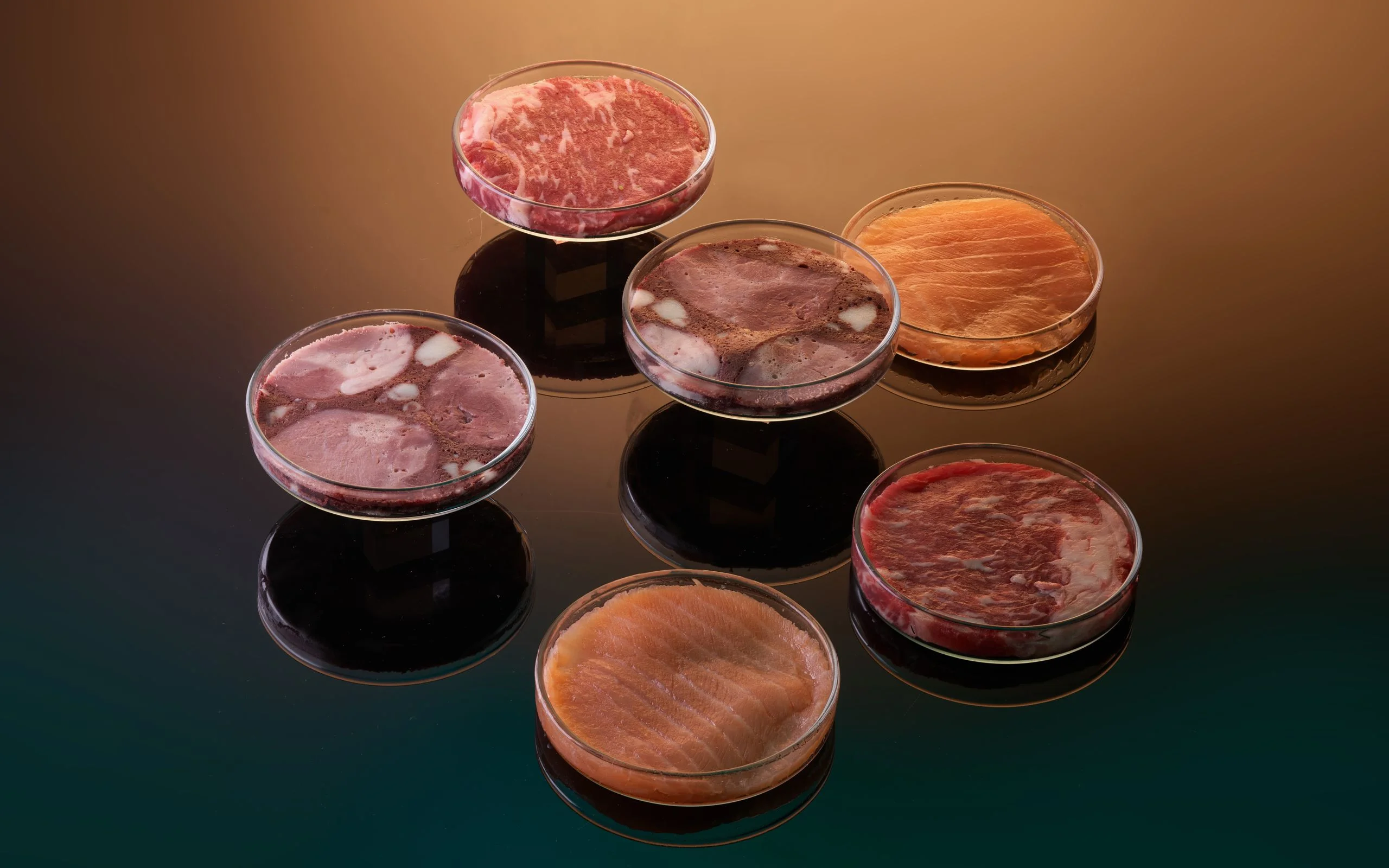
At first glance, it resembles salmon crudo: delicate ribbons of fatty fish, crisp vegetables, a sharp citrus sauce. The difference? No animal died for this dish.
The cultivated salmon arrives plated like something from a high-end omakase bar. That's intentional. Right now, restaurants are the only place consumers can encounter lab-grown meat—chicken, pork, beef, and seafood grown from animal cells. Chefs across the country are working to translate this scientific novelty into approachable dishes. The real challenge isn't the first bite. It's creating enough demand for a second.
Chef Dominique Crenn introduced cell-cultivated chicken at Bar Crenn in San Francisco in 2023. José Andrés brought it to China Chilcano in Washington, DC, with reservation-only tasting menus priced between $70 and $150 per person. Reviews were split. Eater San Francisco praised the meat's "nostalgic, delicate meatiness." Jessica Sidman at The Washingtonian called it "a wannabe." Soleil Ho of the San Francisco Chronicle questioned "the whole premise of the project to recreate meat."
Following these lukewarm debuts, many startups pulled back amid funding shortfalls and state-level bans. Seven states now prohibit the sale of cell-cultured meat. Yet despite three years of setbacks, chefs continue experimenting with cultivated proteins and seafood.

Ocean resources can't sustain current seafood demand, according to James Beard Award–winning chef Renee Erickson of Seattle's The Walrus and The Carpenter. That's why she introduced cultivated salmon to her menu in August 2025, seeking to address both environmental concerns and quality challenges associated with conventional fish farming.
Erickson views cultivated seafood as a strategic solution that could reduce pressure on farmed salmon operations while creating more sustainable conditions for wild fisheries and the communities that depend on them.
Wildtype, the first cultivated seafood company to receive FDA approval, launched partnerships with multiple restaurants last year. Diners sampled their product at chef-driven establishments including Kann in Portland, Oregon, and intimate omakase venues like Robin in San Francisco and Otoko in Austin—though the latter removed it after Texas banned cultivated products. Kingfisher in Tucson, a 32-year-old neighborhood restaurant serving up to 350 guests nightly, also joined the program.
Participating chefs share Erickson's perspective: cultivated seafood offers a sustainable complement to existing options rather than a replacement. Taste quality proved essential before any chef would commit. Both Robin's chef-owner Adam Tortosa and Kingfisher's chef-co-owner Jacki Kuder found the flavor profile comparable to conventional salmon, though texture differs slightly.
Tortosa describes it as lighter with characteristic fatty notes, but with a different mouthfeel. The texture is tender yet breaks apart differently than traditional salmon. This chewier quality leads most chefs to slice it thin and pair it with crunchy produce and acidic elements. The cellular structure limits cooking methods to raw or lightly smoked preparations, as it can't withstand high heat.
Though comprehensive environmental impact studies comparing cultivated and conventional seafood don't yet exist, alternatives like Wildtype could help mitigate ocean pollution and overfishing, both of which have diminished biodiversity and weakened ocean ecosystems.
Education plays a critical role in introducing these novel products. Wildtype co-founders Justin Kolbeck and Aryé Elfenbein brought chefs to their San Francisco facility and supported early service days at restaurants with FAQ materials that shaped menu descriptions. They identified restaurants as ideal venues for starting conversations about cultivated seafood.
At Robin, staff ask every omakase guest whether they'd like to try cultivated salmon. While some diners specifically request Wildtype salmon when booking, roughly half agree after learning about it during their meal. Reception has been largely positive, with curious guests sampling a bagels-and-lox-inspired dish featuring cold-smoked cultivated salmon with confit cherry tomatoes and green onions.
Kingfisher Bar & Grill, a higher-volume restaurant with a somewhat older demographic, emphasizes transparency. The menu describes their decision to serve cultivated salmon and frames it as "Wildtype Sustainable Salmon Crudo" to highlight environmental motivations. Guests who order either the crudo—featuring crisp green apple and citrus sauce—or add it to the restaurant's decade-old poke dish receive the FAQ sheet explaining the product.

Kuder notes that diners want context. Feedback has been overwhelmingly positive, including handwritten thank-you notes for offering a sustainable choice. Encouraged by this response, Kuder plans to feature Wildtype's next salmon iteration in a new Kingfisher dish this year.
Some chefs are incorporating cultivated products in hybrid formats to accelerate adoption. At five dinner events at San Francisco's Fiorella, chef-co-owner Brandon Gillis featured Mission Barns' cultivated bacon and meatballs—hybrid products combining cultivated pork fat with plant proteins. He prepared the meatballs two ways: seared and braised in pomodoro sauce with cavatelli, and deconstructed with pine nuts, currants, and a fennel-onion-garlic sofrito in tomato agrodolce over polenta.
Gillis praised the fat's flavor and mouthfeel but noted it requires precise timing with less margin for error. He sees significant potential, particularly if Mission Barns achieves scale. Cultivated fat may be easier to produce in volume and could avoid the sensory expectations attached to whole meat cuts.
Bringing cultivated products to diners still presents challenges. While Kolbeck and Elfenbein maintain consistent deliveries, scaling novel products involves obstacles from ingredient sourcing to packaging that constrain availability and frequency. This limits cultivated proteins to add-ons or single dishes, typically priced between $22 and $33. Though these prices align with restaurant standards, limited menu integration can make sustained interest difficult to maintain.
Chefs are adapting to supply constraints by introducing products strategically, building familiarity one dish at a time.
Kuder sums up the culinary perspective: "That's why we're chefs. We want people to try new delicious things and experience moments that they've never had before. That's part of the beauty of the industry and the job."