Ever since Starbucks started co-opting seemingly every street corner and strip mall and multiple waves of coffee snobbery (laudatory) have risen in direct opposition to mass market espresso, it’s safe to say the average consumer has changed what they expect from a cup of coffee. Just look at the coffee maker aisle in any big-box store and, along with single-serve and pod machines and other barista-replacing gadgets, you’ll find a slew of coffee makers that promise to make you dozens of drink styles, froth up some milk, and bring you “instant” cold brew. But sometimes the simplest way to make coffee is still pretty darn good. What we’re saying is don’t discount the drip coffee machine.
The cliché of bad drip coffee from a cheap piece of plastic doesn’t apply anymore. And even lots of cheap coffee makers are so much better than they used to be. If you’re in the market for a lot of coffee with little effort, your options are now legion. Companies like Breville, Fellow, Oxo, and Ratio have joined the original king of drip, Technivorm, in making quality appliances that better control factors like water temperature, flow rate, and bloom time, several of which brew coffee that’s almost as good as what you can get with a kettle and a pour-over setup.
Our top picks
- The best drip coffee maker overall: Fellow Aiden
- The best simple drip coffee maker: Ratio Six
- The best plastic-free coffee maker: Caraway
- The best large drip coffee maker for families and guests: Oxo 12-Cup Coffee Maker
- The best budget drip coffee maker: Braun BrewSense
- A cheap (but quality) budget drip coffee maker: Zojirushi Zutto 5-Cup Coffee Maker
Our writers and editors have tested more than three dozen coffee makers over the years, and below we get into the ones that make a good cup of coffee, the ones that make a great cup of coffee, and the unfortunate ones that just can’t keep up with today’s coffee-brewing arms race.
New in this update: We tested two new coffee makers with plastic-free brewing systems from Caraway and Simply Good Coffee. We also tested the new Braun OptiBrew Pro, which includes an onboard milk frother among other features.
The best drip coffee maker overall: Fellow Aiden
Pros and cons
Pros
- Fully customizable
- Easy to use with default settings
- Best-tasting coffee of every machine we tested
- Sleek design
Cons
- Expensive
Specs
Capacity: 10 cups
Carafe style: Thermal
Dimensions: 8.9" x 8.9" x 12"
Weight: 9.6 lb.
Features: Adjustable brew water ratio; adjustable temperature settings, flavor profile settings, programmable 24-hour timer; Wi-Fi connectivity; cold-brew capable; SCA Golden Cup capabilities
Warranty: 3 years
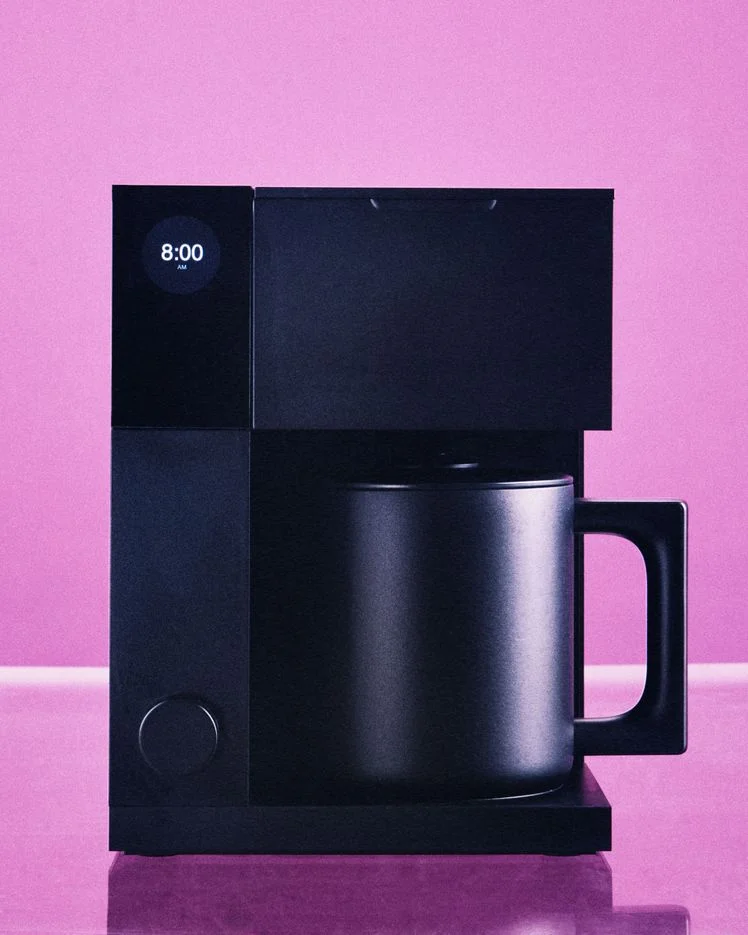
Fellow has a knack for making coffee gear that’s both beautiful and effective, and its automatic brewer fits right in. The Aiden is as close to a perfect drip coffee maker as we’ve tested because its designers considered nearly every need. It offers brew profiles with different water temperatures and times for light, medium, and dark roasts, and it tells you exactly how much coffee to use in both grams and tablespoons.
But even with all its bells and whistles, the Aiden still has to make coffee that tastes good. And it does. Senior editor Noah Kaufman compared it side-by-side to carafes of pour-over and found both hit fruity and caramel notes, with real nuance and depth of flavor.
What we love: The Aiden is customizable across so many parameters you might lose track: You can set water temperature (anywhere between 122°F and 210°F); the time and number of pulses of water (think of them as the individual water pours if you were making pour-over coffee); and bloom time that helps get rid of gasses that can make your coffee taste sour. This machine can also make a smooth pot of cold brew by slowly dripping water over the course of several hours. (Machines that claim they can make cold brew in minutes don't usually live up to their own hype.)
That sounds like a lot, but the Aiden is surprisingly easy to use thanks to a simple dial, a clear LCD screen, and straightforward instructions. And even though you can tweak your coffee in all the ways outlined above, you can also just use the Aiden like a basic one-button drip coffee maker. The Instant Brew option will use however much water is in the tank, brewing at water temperatures recommended by the Specialty Coffee Association (SCA) in its Golden Cup standards, which mark water temperature and coffee-to-water ratios for ideal flavor. To paraphrase Fellow’s founder, who visited us in the Test Kitchen, he wanted the machine to work for both coffee connoisseurs and total noobs.
The Aiden also features a slew of carefully considered, where-have-you-been-my-whole-life details. Its two filter baskets—one for three cups or fewer and one for more than three cups—have spring-loaded seals to prevent drips when you remove them to empty the grounds into the garbage. It doesn't have a warming plate because it doesn't need one—the included thermal carafe kept coffee hot on the dining room table for around two hours. And the removable side water tank is easier to fill than either a built-in tank or one on the backside of the machine.
During the testing, we also tried Fellow’s Drops program. It’s not exactly a coffee subscription—you order via text on demand—but it gives you access to various rare and small-batch beans from Fellow’s roaster partners. The Aiden comes preloaded with specific brew settings for recent Drops offerings, adjusting water temps and pulse cycles beyond the standard light/medium/dark profiles and the resulting coffee produced using the Drops settings was truly excellent. Brewing the same beans with both the Drops settings and the regular settings make a real difference. It’s one of the closest ways to recreate that “rare pour-over at your favorite café” experience at home.
Check out an even more detailed rundown on the Aiden here.
What we’d leave: Compared to most of the drip coffee makers you’ll find at a big-box store, it’s somewhat expensive. However, within the recent wave of better-quality drip coffee machines, it falls right in line with average pricing we’ve come to expect from a daily coffee workhorse that produces this level of coffee.
In the long run: Noah has used the Aiden about five times a week for over two years, and it has lived up to its early promise. The coffee has remained consistently good, and we’ve had no issues with the interface, plus the removable side water tank has continued to prove its convenience.
The Aiden is a precision machine, and regular maintenance matters. Noah found this out the hard way after too many months of skipping descaling, which eventually produced a loud noise that sounded like the pump might be on its last legs. To get an unfiltered read on customer service, he reached out as a regular customer rather than identifying himself as a Bon Appétit editor. Fellow responded within two days, pointed him toward descaling as a fix, and after he sent a video of the machine in action, offered to replace it entirely. They also recommended descaling monthly going forward, which felt a little aggressive, but the clear instructions were appreciated.
The best simple drip coffee maker: Ratio Six (Series 2)
Pros and cons
Pros
- One-button operation and pour-over quality
- High-performing thermal carafe
Cons
- Fixed water tank is annoying to fill
Specs
Capacity: 8 cups
Carafe-style: Thermal
Dimensions: 13" x 6.5" x 14.25"
Weight: 8 lb.
Features: Blooms coffee, SCA Golden Cup capabilities
Warranty: 5 years
Good to know
Ratio has been trying to limit the plastic across its whole lineup and offers up this stainless steel dripper as an add-on to the Ratio 6, which ensures no hot water or coffee touch plastic during the brewing process
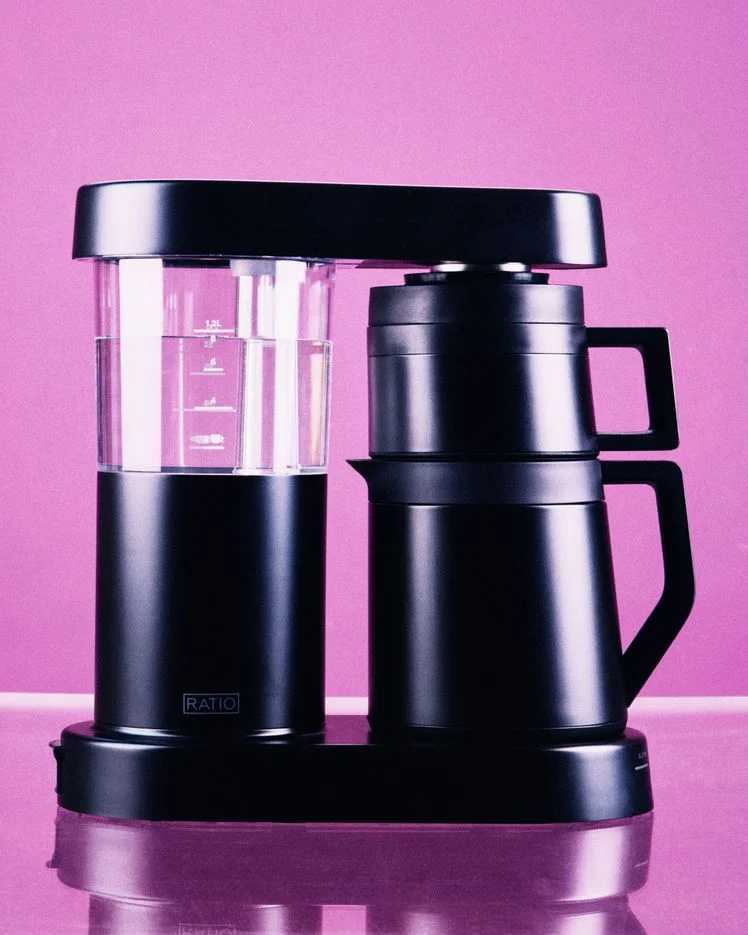
The Fellow Aiden is a great coffee maker, but it has a lot going on. We know that some people’s ideal drip coffee maker is one you load up with coffee, turn on, and leave to do its thing. The Ratio Six (which is actually an 8-cup coffee maker, don’t let the name fool you) lets you do just that without compromising on the quality of the brew.
What we love: It’s got one button that begins the brew process. There is no water temperature to set, no flavor profiles to adjust. But the brewing process, like the Fellow's, is designed to mimic a pour-over. The Ratio first blooms the coffee, then it uses a slower flow to improve extraction. The resulting coffee is absolutely delicious and takes no effort on your part. The Ratio Six (Series 2) includes a thermal carafe that outperformed all the others we tried (the Fellow was a close second), keeping coffee hot for over two hours.
What we'd leave: The Ratio's fixed water tank at the back of the appliance is a real bear to fill. We either had to set the machine sideways on the counter or slide it out from under a cabinet to fill it with water. The brew basket also sits on top of the carafe instead of being attached to the body in any way. That made it easy to empty, but it was a little precarious to set up until we got the hang of it.
In the long run: Ratio’s 5-year warranty is longer than just about any other coffee maker you can buy (Technivorm’s Moccamaster is the only other one with a warranty that long), and it’s clear why the company felt comfortable making such a long offer. This thing has turned out to be as reliable a small appliance as we’ve ever used. It makes the same quality coffee more than a year later than it did the day we unboxed it.
However, the things we found a little irritating about the Ratio’s design at the beginning did not get less irritating over time though. Unless it is set in an open space (i.e., not under a cabinet), filling the tank with water is cumbersome. And the small opening of the carafe demands a brush to properly clean it, which is not a deal breaker, but is a little annoying (especially compared to the wide opening of the Aiden’s carafe).
None of that takes away from the fact that, as far as small appliances go, this is as close to a buy-it-for-life pick as you’re going to find.
The best plastic-free coffee maker: Caraway 10-Cup Coffee Maker
A note on the wave of plastic-free coffee makers hitting the market: They’re not necessarily plastic-free. Countertop appliances are full of plastics, from their outer shells to their inner mechanisms because plastic parts are cheap, easy to mass produce, and, for many applications, durable enough. But a new(ish) crop of brewers eliminated plastic anywhere water travels through the machine in an attempt to avoid any possibility of plastic leeching into the coffee.
Aside from the Ratio Eight (below), which has featured a plastic-free brew path since it was introduced over a decade ago, our social media feeds have been serving us ads for newer plastic-free brew path models from Simply Good Coffee and Caraway, both of which we tested in our most recent update to this article.
How much does plastic in the brew path matter? As with coating technology on nonstick pans, the science is developing. On a more subjective level, many coffee drinkers do say glass and steel brewing—along with the ceramic used in pour-over—tastes better.
Pros and cons
Pros
- Sleek design in multiple colors
- Simple, quiet operation
- Versatile orientation
Cons
- Top only water reservoir access
- Short warming plate cycle
- No programming function
Specs
Capacity: 10 cups
Carafe-style: Glass
Dimensions: 13" W x 6" D x 14" H
Weight: 13 lb.
Features: Plastic-free brew path, warming plate, insulated stainless-steel basket, reusable filter, quiet operation, cleaning mode
Warranty: 2 years
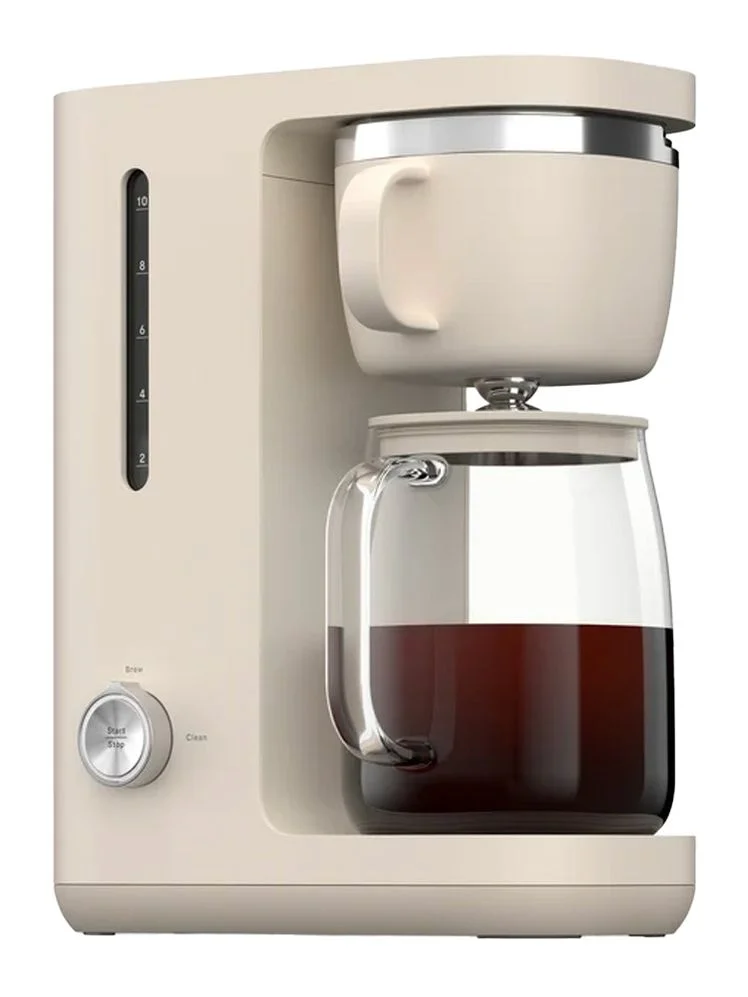
Everything hot (and cold) water touches in this machine is either stainless steel or glass, including the embedded reservoir. Caraway also remains committed to cute colors and stylish aesthetic, as the new coffee maker’s four available colorways are matched to those in existing Caraway products.
What we love: The Caraway 10-cup coffee maker is a simple setup, so there's not much to dislike. It has single push-button operation and brews between 195°F–205°F meeting Golden Cup Standards with an automatically programmed bloom cycle. The stainless-steel reusable filter (you can also use paper if you wish) does a sufficient job of keeping silt out of our cup while also brewing rich, flavorful coffee, and the insulated basket means little heat is lost while the blooming occurs. Speaking of the basket, Caraway designed it to fit in two perpendicular directions, meaning you can orient the machine with the short side facing out, perhaps nestled between two other appliances, or with the long side pushed back wider against the wall.
Even though it costs more than either of the two coffee makers recommended above, it is quite a bit less expensive than the Ratio Eight, which is why we’re choosing to recommend it here instead. From a pure coffee perspective we prefer the Ratio, but we don’t love its $700 price tag. The Caraway makes consistently good coffee with its plastic-free arrangement for $200 less.
What we’d leave: Considering the engineering it takes to produce a plastic-free brew path, we were left somewhat baffled by the lack of thought that seemed to go into the metal lid for the water reservoir, which just sort of sits on top—and loosely at that. The opening of the reservoir is nicely sloped so even a few errant drips will channel in. But the lid, which sits proud of the top surface of the unit and only slightly inset, can come dislodged just by shifting the machine (which you’ll need to do to fill it if it’s under a cabinet) or brushing your arm or hand across it too closely. Access to the reservoir is a bit limited as well, and while a water-only cycle is recommended weekly, plus a descaling for monthly maintenance, we’re a bit concerned about the prospect of something gunky getting in there and not being able to clean it out. Finally, there’s no option to preprogram the machine to brew automatically in the morning.
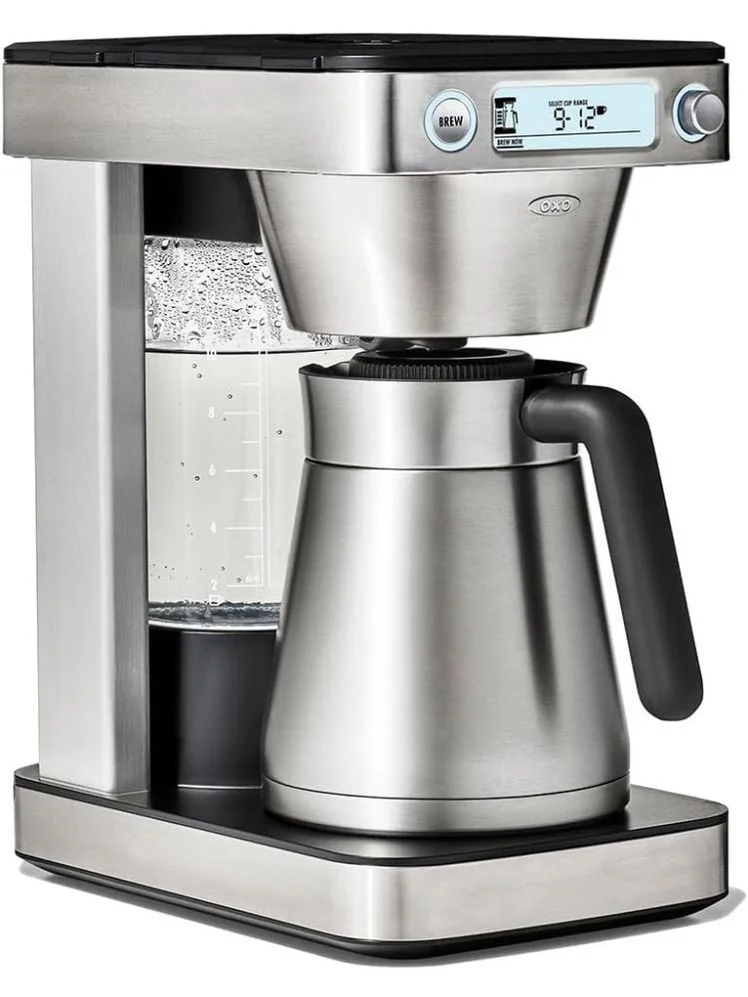
The best large drip coffee maker for families and guests: Oxo 12-Cup Coffee Maker
Pros and cons
Pros
- Great coffee
- Very good thermal carafe
- Can brew single-serve coffee
Cons
- Doesn’t have detachable water reservoir
Specs
Capacity: 12 cups
Carafe-style: Thermal
Dimensions: 15" x 10" x 17"
Features: Single-serve and half-carafe option, programmable timer
Warranty: 2 years
We don’t have any real issues with the quality of the coffee or the functionality of either the Fellow or Ratio coffee machines, but neither of them count as XL coffee makers. The Oxo 12-cup machine gives you 20% more volume while still keeping the quality of the coffee very high. It uses a rainmaker shower head to evenly saturate the grounds, and the resulting coffee is the kind of nuanced, fresh-tasting carafe we’d expect from something at this price point. There are a couple other features that push this one to the top of the pile.
What we love: First is its range. It can brew anywhere from a single cup of coffee all the way up to 12 cups with no sacrifice on flavor or aroma. (Entertainers, take note: This means you can use the same machine to fuel both your normal weekday mornings and the occasional group brunch.) The Oxo also comes with a well-insulated stainless steel carafe that keeps coffee warm enough to drink for almost two hours and has an intuitive digital interface with a dial and a brew button that make it easy to schedule your coffee ahead of when you'll need it.
This coffee maker also has plenty of the little design touches that define Oxo products, including a removable shower head for easy cleaning and filter holders that are flat on the bottom so you can set them on the counter or in the sink after a brew without them spilling everywhere.
What we’d leave: The water tank is built into the body of the machine, and while the opening isn’t too small, it’s still not as easy to fill as a removable reservoir.
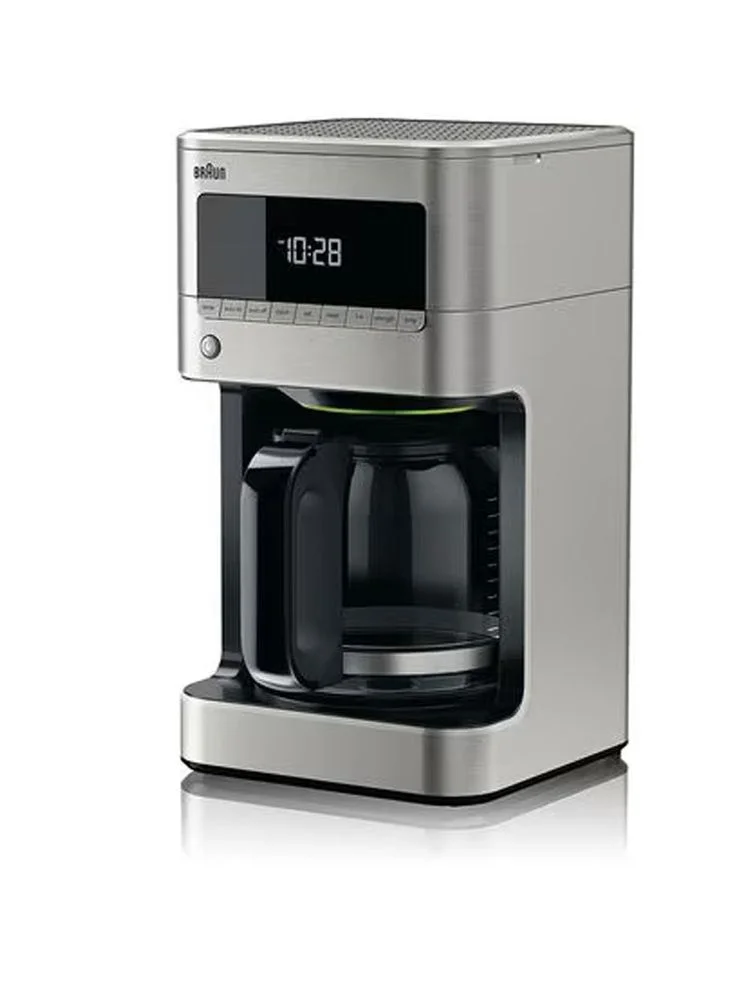
The best budget drip coffee maker: Braun BrewSense
Pros and cons
Pros
- Under $100
- Coffee is brewed at a drinkable temperature
- Adjustable hot plate
Cons
- Carafe feels flimsy
Specs
Capacity: 12 cups
Carafe-style: Glass
Dimensions: 7.9" x 7.9" x 14.2"
Features: 1–4 cup options, adjustable brew strength, programmable timer, water filter, adjustable hot plate temperature
Warranty: 3 years
Let’s get something straight about budget coffee makers: they don’t produce coffee on the same level as machines that precisely regulate water temperature and flow rate. These are the kind you might find at an adequate but not exceptional Airbnb. So we didn’t judge the Braun against the Fellow or the Ratio, but rather against the Mr. Coffees, Ninjas, and Black & Deckers of the world. By that measure, it did an admirable job. For a machine you can sometimes find on sale for $80, the coffee came out bright rather than stale or watery.
What we love: There are a few ways you can tell a good cheap coffee maker from a bad one. One, it will produce water hot enough to actually extract flavor from ground coffee. When we measured the temperature of water as it ran through the Braun, it was more than 10℉ hotter than many of the other cheap coffee makers we tried. Another is that it will evenly distribute water over the coffee. Even if a coffee maker looks like it has a shower head that can spread water across the coffee bed, you still might end up with a machine that creates deep channels. Basically, a situation where streams of water get drilled through narrow areas of coffee. When we looked at the coffee bed of the BrewSense after making a pot, the coffee was evenly wet.
The proof will always be in the taste of the coffee, though, and the BrewSense pulled out many of the flavor notes we got from the Fellow and Ratio, though in a more muted way.
Also, for such an inexpensive coffee maker, the BrewSense came with some nice features, like the ability to slow down the water flow in order to brew small batches and a hot plate with adjustable temperatures to keep coffee from getting burnt while it sits.
What we’d leave: The glass carafe wasn’t our favorite. It flipped open a little too easily, which seemed like it could cause spills. And, frankly, a thermal carafe would have been nice. Some other budget machines have them.
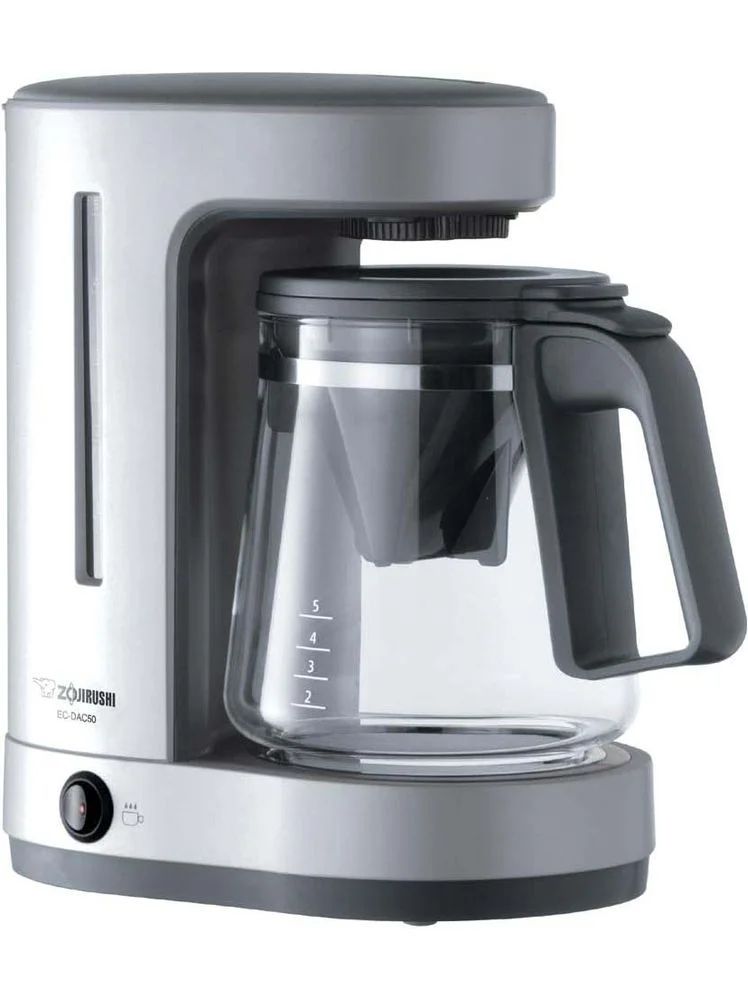
A cheap (but quality) budget drip coffee maker: Zojirushi Zutto 5-Cup Coffee Maker
Pros and cons
Pros
- Great value
- Compact design
- Removable water tank
Cons
- Lacks temperature control of expensive machines
- No thermal carafe
Specs
Capacity: 5 cups
Carafe-style: Glass
Dimensions: 9" x 6" x 10.75"
Features: Hot plate, removable water tank
Warranty: 2 years
What we love: This little thing? Makes good coffee? Grading on an appropriate curve for something that costs less than $100, it absolutely does. Its design is unlike any other machine we tested, with a brewing cone that sits inside the carafe. That’s one way to achieve a small footprint. But it also keeps the coffee closer to the shower head, which helps maintain a hotter temperature than it otherwise might.
The coffee is not what you will get if you brew with the Fellow or the Ratio, but it can produce a more flavorful pot than any other sub-$100 machine we used (the Braun above is sometimes less than $100, but retails for more). And because it comes from well-respected Japanese brand, Zojirushi, the name behind our forever-favorite rice cookers and coffee tumblers, we trust it’s as high quality as something in this price range can get.
It also has a removable water tank that makes filling it each morning a much less irritating task, and is rare in cheap coffee makers.
What we’d leave: This is a small machine, only five cups. That may not be enough even in a two-coffee-drinker household if those two people need much more than eight ounces of coffee apiece. It also only has a single switch, which, on the one hand, makes brewing coffee easy (flip switch, brew coffee), but can lead to a bit of confusion. That switch also adjusts the temperature of the hot plate, but that isn’t made clear either on the machine or in the instructions. Zojirushi has famously dense instruction manuals that can be hard to follow, and that’s true even for something as simple as this.
How we tested coffee makers
In short, we made copious amounts of coffee in these machines. To keep the brewing process as consistent as possible, we used the same beans or grounds from the same roaster in each test—usually a blend of Counter Culture coffee beans, freshly ground with a Fellow Ode burr grinder. If the coffee maker came with a reusable filter, we used that; otherwise, we used standard Melitta paper filters.
If machines had features like a “bold” setting or the ability to brew half batches or single cups, we tested them to see what kind of difference the setting made (this was a particularly involved test with the Fellow and the Breville machines).
For machines with thermal carafes, we used probe thermometers to test how long they kept coffee above 110℉.
How we judged these coffee makers
Did they make good coffee?
The single most important thing you want from a drip coffee maker is a pot of coffee you actually want to drink. We looked for coffee makers that provided the most depth of flavor and nuance to their coffee. We discounted anything that made coffee that was burnt or watery.
Are they easy to use?
The point of a drip machine is to deliver your morning coffee in large quantities with minimal thinking from you. That means it should be easy to fill and easy to operate. If a machine has lots of customizable options like the Fellow Aiden, using them should still be straightforward enough that we could pick up their operation quickly.
Do they have special features, and do those features work?
A number of machines offered the ability to precisely regulate temperature. Some came with thermal carafes. Most had the very basic, but very important ability to schedule a brew ahead of time. We used every single option available.
How do they look? How do they feel?
As drip coffee makers have advanced technologically, they have also advanced aesthetically. We tested a number of machines that looked quite handsome on the countertop. We also noticed that a lot of the inexpensive machines felt too light and flimsy, which we’d consider an indicator that they may not last very long.
Other drip coffee makers we liked
These machines, which include several of the fancier SCA-certified brewers as well as a number of simple, cheap ones, didn't make the short list of top picks, but they did well enough that we think you'll be happy if you pick one up.
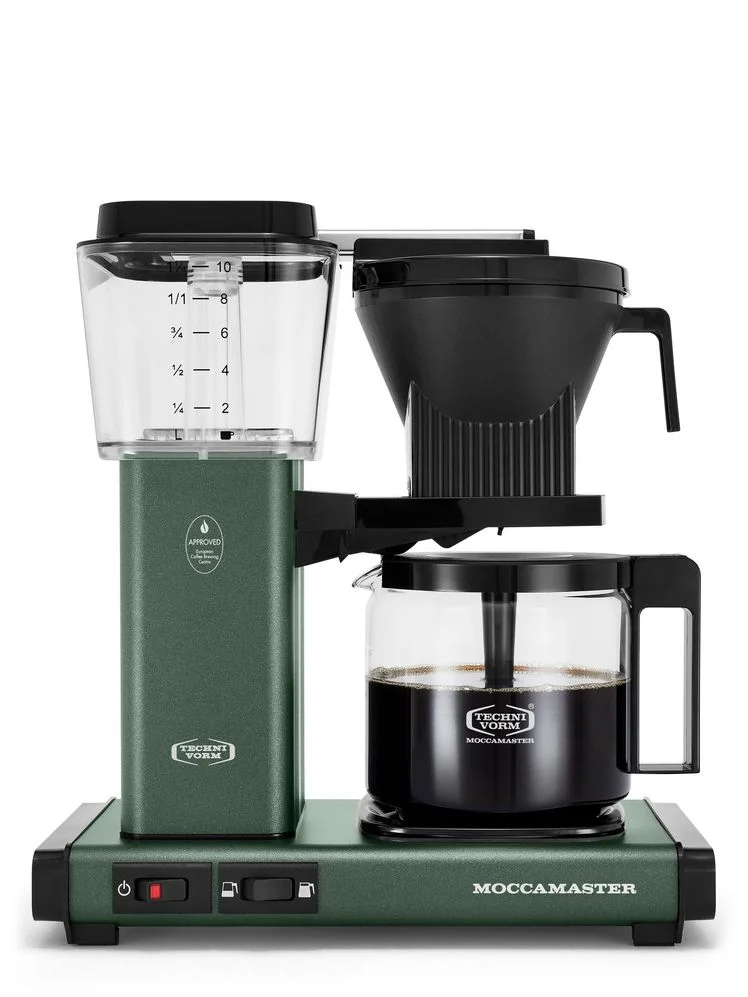
A longtime darling of both online coffee publications and coffee lovers, Technivorm Moccamaster machines were some of the first to stake a claim on good drip coffee. They were actually the first to receive the SCA Golden Cup standard stamp of approval. And indeed, the coffee from the Moccamaster is tasty. It’s also simple in the way you’d traditionally expect a drip coffee maker to be. Just an on-off switch and a full pot–half pot switch.
Despite those two very big pluses, there are a few things that land the Moccamaster down here instead of up with our top picks. One is its look. Compared to the Ratio machine, which is just as simple but also offers extras like bloom time in the brewing process and a thermal carafe, the Technivorm takes up more counter space and doesn’t look nearly as sleek. But if you’re into the Technivorm’s diner coffee maker aesthetic (and I totally respect it if that’s your thing) it is a high-quality, long-lasting coffee maker (the Test Kitchen has had the same one for more than four years).
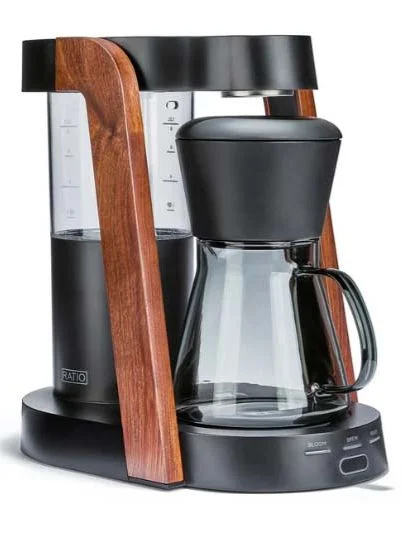
An OG in the plastic-free brew path drip coffee space, the only problem with the new Ratio Eight is that it’s pretty damn expensive. But it’s also part coffee maker, part art object—with wood accents and a hand-blown glass carafe—so for the right person, the price may well be worth it. The coffee it brews is superb: evenly bloomed, well-extracted, and just as easy to make as with the Ratio Six thanks to the same single-button operation.
The new version of the Ratio Eight adds a half-carafe mode (just long-press the brew button) that adjusts bloom time and flow depending on the batch size. It also comes with the thermal carafe to end all thermal carafes; it’s one of the heaviest we’ve ever used and kept water above 120°F for four hours.
Beautiful, functional, and built to last, this is a great machine. But with a price around $700, it’s in that echelon of luxury goods that isn’t accessible to a wide enough audience to make it a top pick.
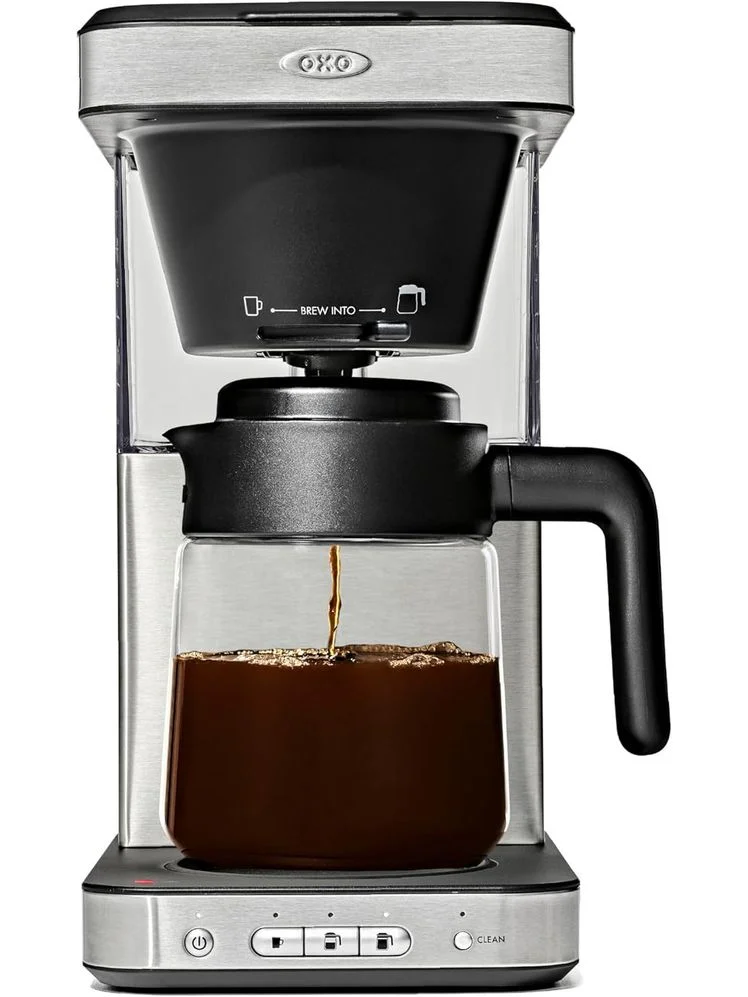
If you want to join the ranks of “better” drip coffee but don’t like the idea of spending $300 or more on your coffee maker, this mid-size, mid-priced machine from Oxo is a good choice. It gets water hot enough extract good flavor from ground coffee (we measured it at 196℉, which is on the low end of the acceptable range) and distributes it nicely thanks to Oxo’s showerhead design. It also blooms the coffee, though you might not know that if you don't read the fine print in the manual.
The Oxo has settings for a full 8-cup pot, a half pot, and a single cup. Oxo touts that single-serve capability as a major feature in its own description of the coffee maker, and it’s…fine. The individual cup didn’t brew up as flavorful as the full pot nor as flavorful as the single cups brewed by some other coffee makers, like the Fellow or Oxo’s higher-end 12-cup machine. But it does make good coffee, has a relatively small footprint, 7 inches wide and 10 inches deep, and feels well-built, as many Oxo products are. You can upgrade this coffee maker with a stainless-steel carafe which we didn’t test, but other Oxo insulated carafes performed well in our testing over the years.
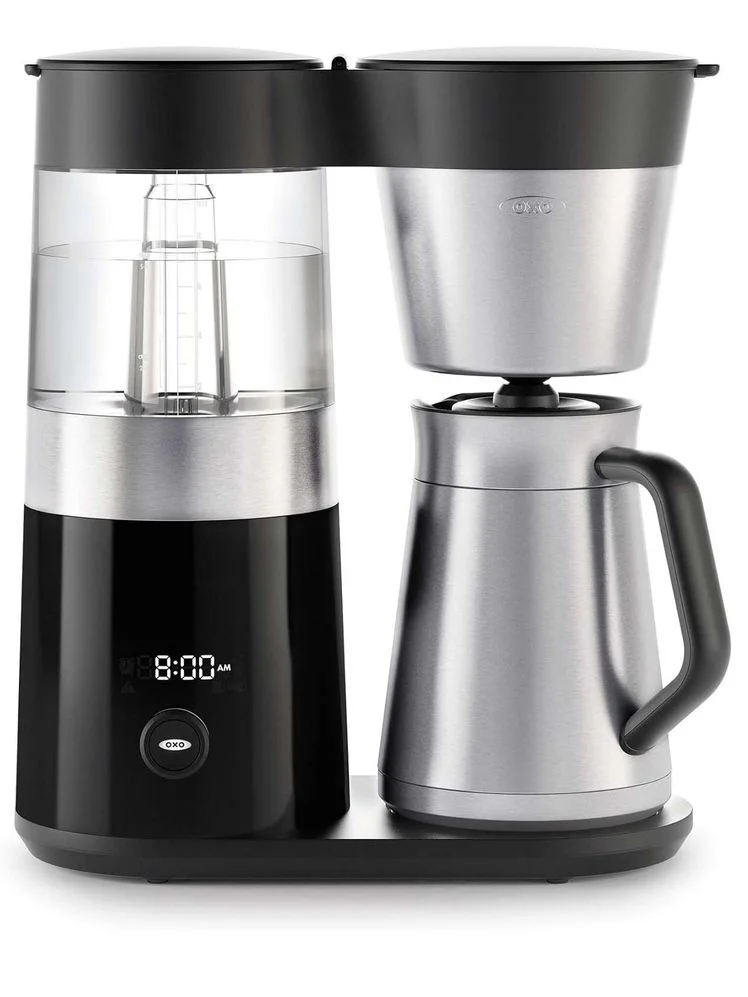
The Goldilocks size of the three Oxo coffee makers we tested ticks the main boxes for a high-end drip machine: It has good temperature control between 197℉ and 204℉, comes with a thermal carafe that keeps coffee warm for well over an hour, and it blooms the coffee. And like so many of Oxo’s products it comes with some subtle but smart design choices like keeping the lid of the grounds container attached to the machine, choosing a dial controller instead of a lineup of buttons, adding a freshness timer so you know how long the brewed coffee has been sitting, and a cleaning indicator to let you know when it’s time for descaling.
On the flip side, the opening of the carafe is pretty narrow, so you’ll need to clean it with a bottle brush. Technically, this machine does not have the Golden Cup standard (though it does keep its water in the proper temperature range). It also offers fewer options than the Fellow, but isn’t as simple as the one-button Ratio.
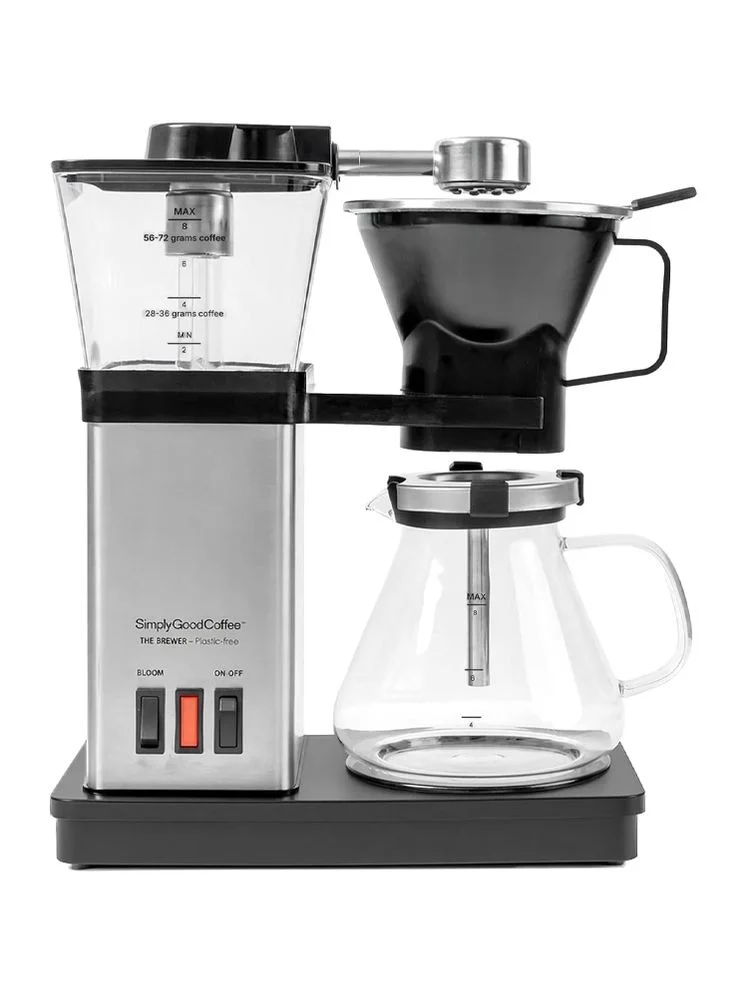
If you like the look of the Moccamaster but want something plastic-free (inside, at least), Simply Good Coffee’s The Brewer looks like a near-duplicate that comes in both a programmable and simpler on-off model. At nearly $400 for the latter, we think the similarly priced Caraway is a better plastic-eschewing choice. But it doesn’t let you set a brewing time, so if that’s important to you, then the programmable model at $40 more might be right for you. While it produced acceptable coffee overall, the parts felt a little flimsy at times with the reservoir lid not quite sitting flush or other pieces twisted slightly out of alignment out of the box. It takes #4 cone filters, like those used in pour-over setups, and one nice feature is that the filter basket sits flat on the counter or on a coffee scale, making measuring out grounds directly into the filter super easy. And there are gram ratios printed right on the reservoir to help you remember how to math when you’re still groggy. Lastly, one slightly confounding aspect is the inclusion of a Bloom switch, which must be turned on and, when engaged, produces markedly better tasting coffee. Which begs the question why not just have the “good coffee” mode be the only mode? “Very dark roasts and older, degassed beans benefit the most from skipping or heavily shortening the bloom phase,” Dean Rotchin, CEO of SimplyGoodCofee, told us. “While blooming is standard for fresh pour-over coffee to release trapped carbon dioxide (CO₂), certain roast profiles and conditions make it unnecessary or even counterproductive.” Lastly, this machine has a lot of parts (lids, filter holders, etc) which, generally, will just sit in their respective places most of the time, but if you have to this one in a cabinet, it can be a lot to keep track of.
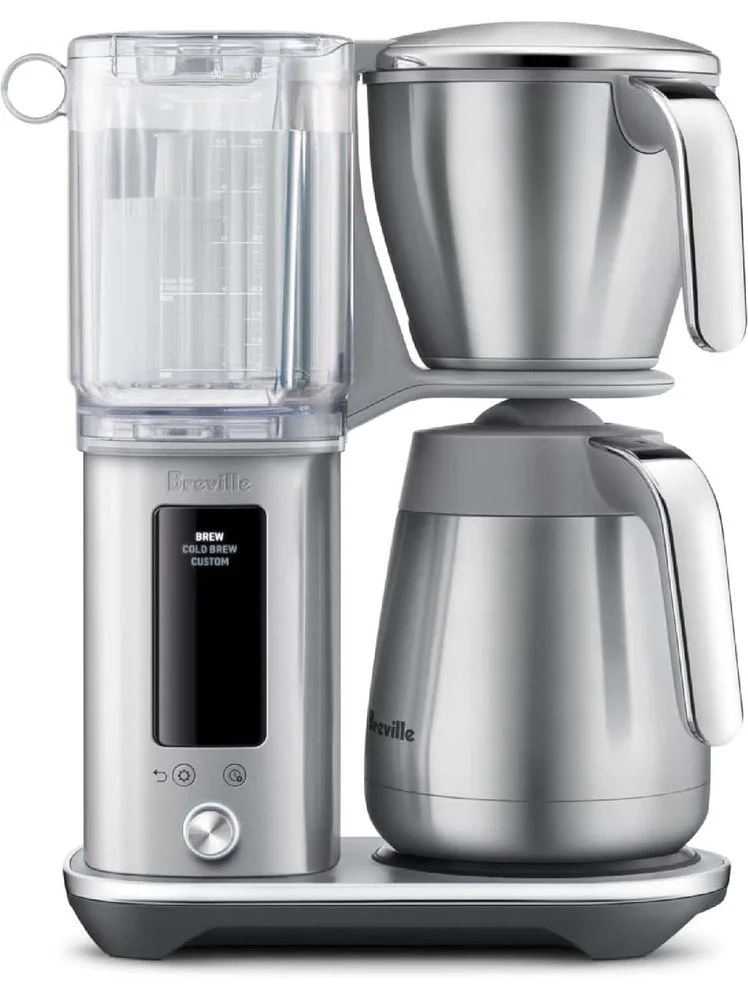
Released in 2025, Breville’s Luxe Brewer has the look and feel of something designed specifically to compete in this world of increasingly customizable, increasingly high-end drip coffee makers. It offers the ability to set bloom volume, bloom time, water temperature, and flow rate. Plus, it makes cold brew overnight.
This is a very good coffee maker, and once someone learns how to use it, they’ll be pleased with what they get. However, it costs almost the same amount as the Fellow Aiden, and it doesn’t give you quite as much. Bloom volume and flow rate, for example, can only be set to low, medium, and high. And while that might be plenty of optionality for most people in most situations, the point of having all these settings is to offer the ability to tease out exactly the flavor you want from any batch of beans. And we think the Fellow’s more precise capabilities are worth an extra 20 bucks.
The interface of the Breville is also a little confusing. When you turn it on, it’s not immediately clear whether you’re adjusting settings or starting a brew cycle, and many of the customization options are represented by unlabeled icons. In an era of increasingly complex appliances, an intuitive, user-friendly interface is more important than ever, and that’s where the Luxe Brewer falls short.
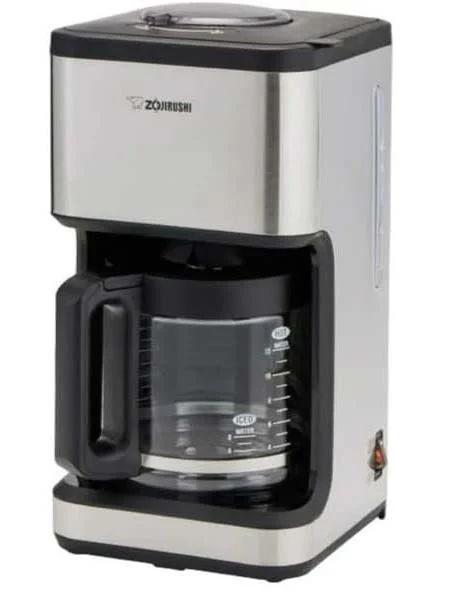
With more than twice the capacity of the Zojirushi Zutto, the Dome offers a more traditional drip coffee maker experience. Like the Zutto, it produces coffee that punches above its weight for its price point, and the simplicity of a single switch that both brews coffee and turns on the warming plate. The removable showerhead does a nice job of fully saturating the coffee grounds, and a “bold” setting concentrates the water to extract bigger flavors. A standout design detail is its silicone gasket, which seals the top of the carafe during brewing to help keep the coffee at temperature as it drips through. If you’re looking for a straightforward, no-fuss machine that makes great coffee without breaking the bank, the Dome is an excellent pick.
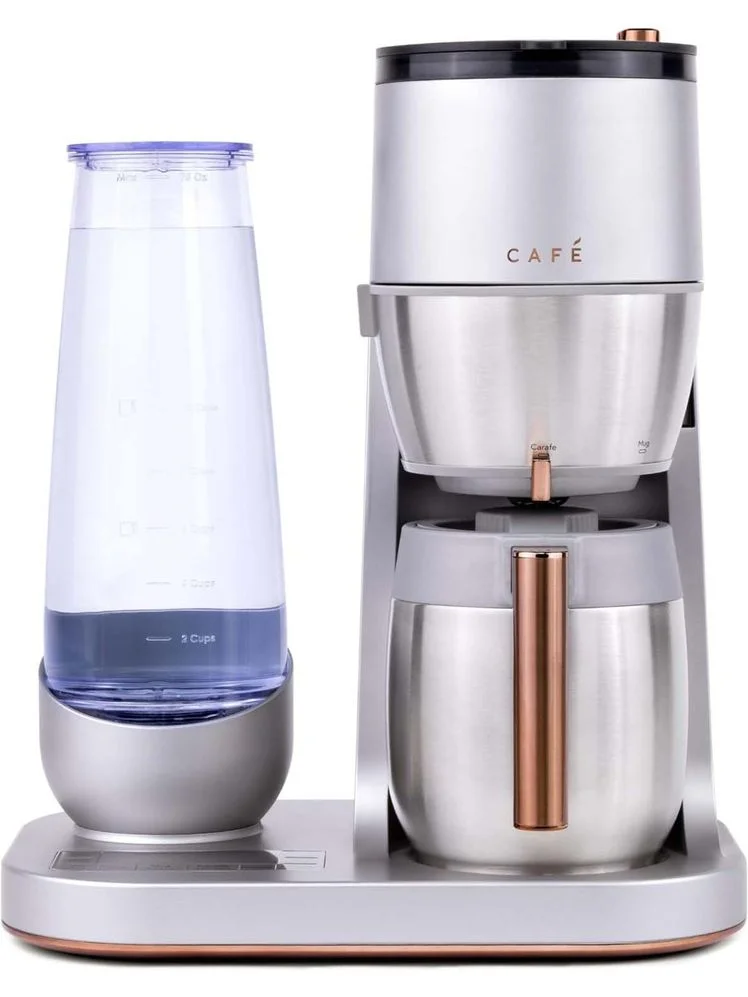
The Grind and Brew effectively toes the line between a simple, self-contained coffee maker and a techy, customizable one. The built-in grinder has six grind sizes and, while it’s not so nice or versatile that we’d pick it over a stand alone burr grinder, it gets the job done.
This machine has variable temperatures between 185℉ and 205℉ and can brew using the SCA’s Golden Cup standard. That made its coffee both very good and very consistent. And it's a nice touch that you can easily switch between a setting for single cups and one for full carafes. Ultimately, it ended up in this middle space of not being able to do as much as the Fellow Aiden but holding a price tag that keeps it out of what we’d consider a “budget” range.
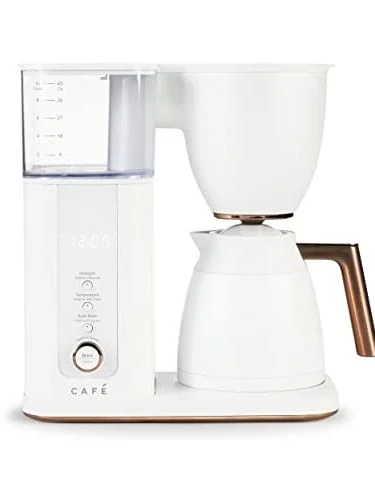
This is basically the Café Grind and Brew without the grinder or the single serve option, and the glass carafe model is actually priced low enough that we’d recommend it for someone who thinks the Fellow or the Ratio machines are a bridge too far for their wallet.
Like the Grind and Brew, you can use the SCA Golden Cup settings or customize water temperature between 185℉-205℉. Also like the Grind and Brew, the wide shower head evenly wets the coffee grounds and produces a high-quality pot. If you already have a solid coffee grinder or are willing to invest in one, this is a drip machine to consider.
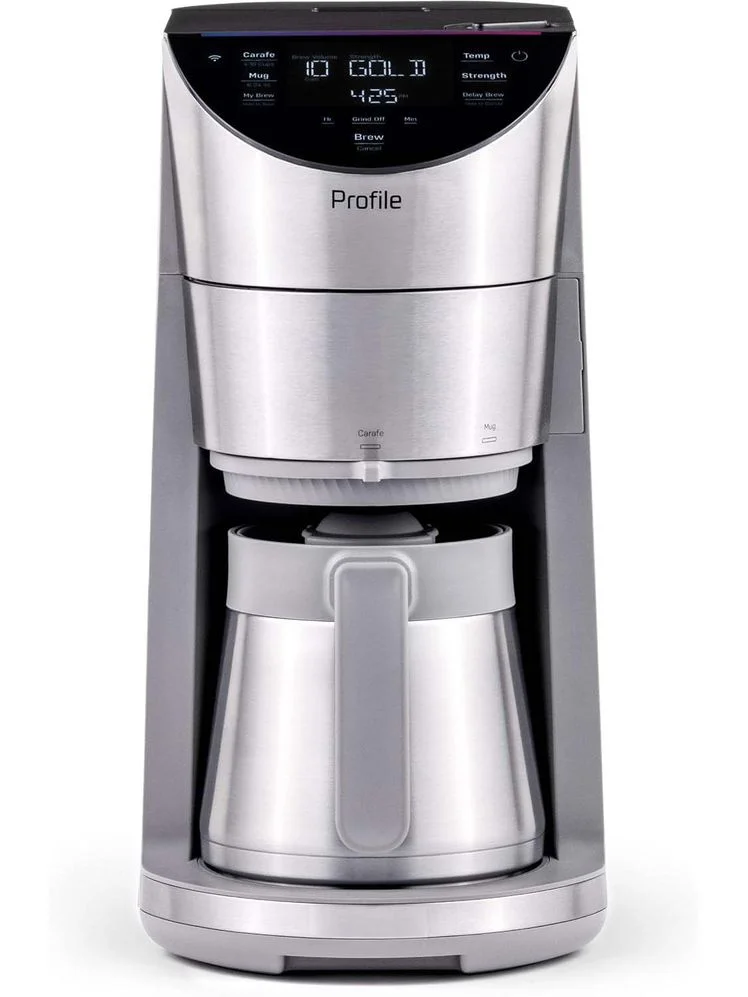
GE is the parent company of Café, so it wasn’t surprising that some of the technology found in the Café Grind and Brew coffee maker used by the mother brand. The Profile features one significant improvement over the Café Grind and Brew: It shrank its countertop footprint. Instead of stretching out horizontally across the counter like the Café, the GE better integrates the water tank snugly into the back of the machine for a coffee maker that fits much more comfortably in a variety of kitchens.
Otherwise, it operates much like the Café. It allows for freshly ground single serve coffee, features an SCA Golden Cup setting, and has a user-friendly app that will get a fresh pot of coffee going from anywhere in the house. Like the Café version, we think the GE is good, but not great, and for just a little bit more money, you can get one of our top picks. After spending many months with both the Café and GE Grind and Brew models, we’ve found that the washable mesh filters let too many grounds wiggle their way into the coffee and regularly found sediment at the bottom of our cups.
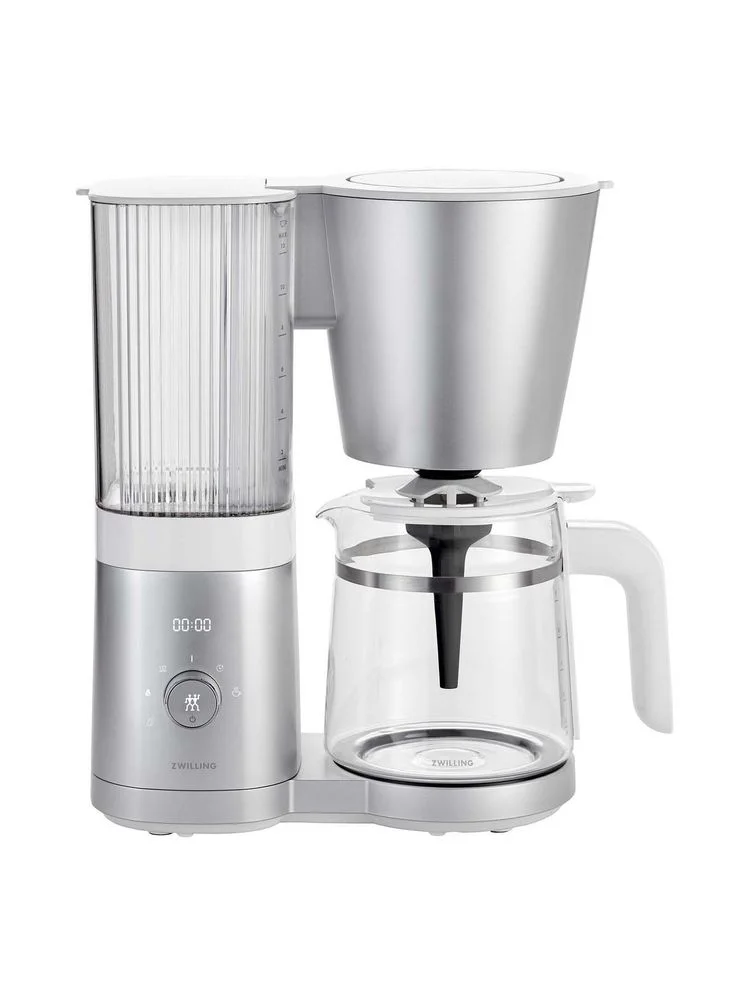
Yet another machine that meets the Golden Cup standard (it’s become table stakes for “good” drip coffee makers at this point), the Zwilling Enfinigy makes coffee on par with the Café and Technivorm machines and is less expensive than all of them. Despite a high end look though, it’s also lighter weight, which makes it feel cheaper by comparison.
It has a number of standard features: the ability to brew between 2 to 12 cups, a timer to plan brews ahead, and a keep warm function. Like the Simply Good Coffee machine above it also offers the curious feature of a bloom function that you can toggle on and off. Blooming coffee seems like all upside and no downside, so we can’t think of a good reason you’d ever want to toggle it off. Maybe you like off flavors in your coffee?
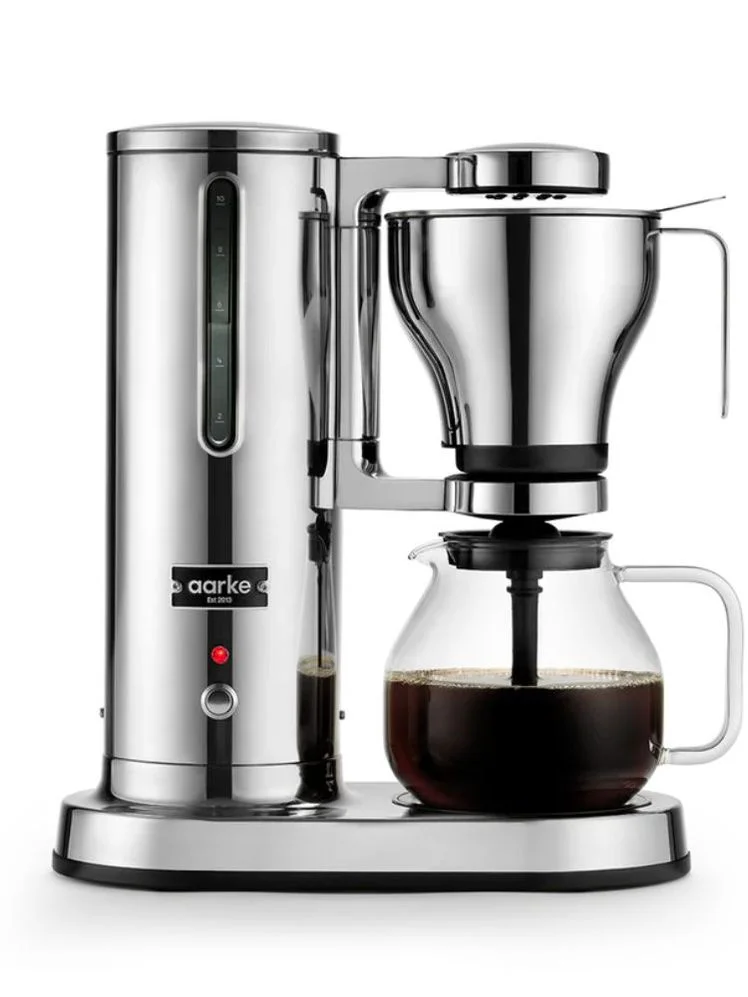
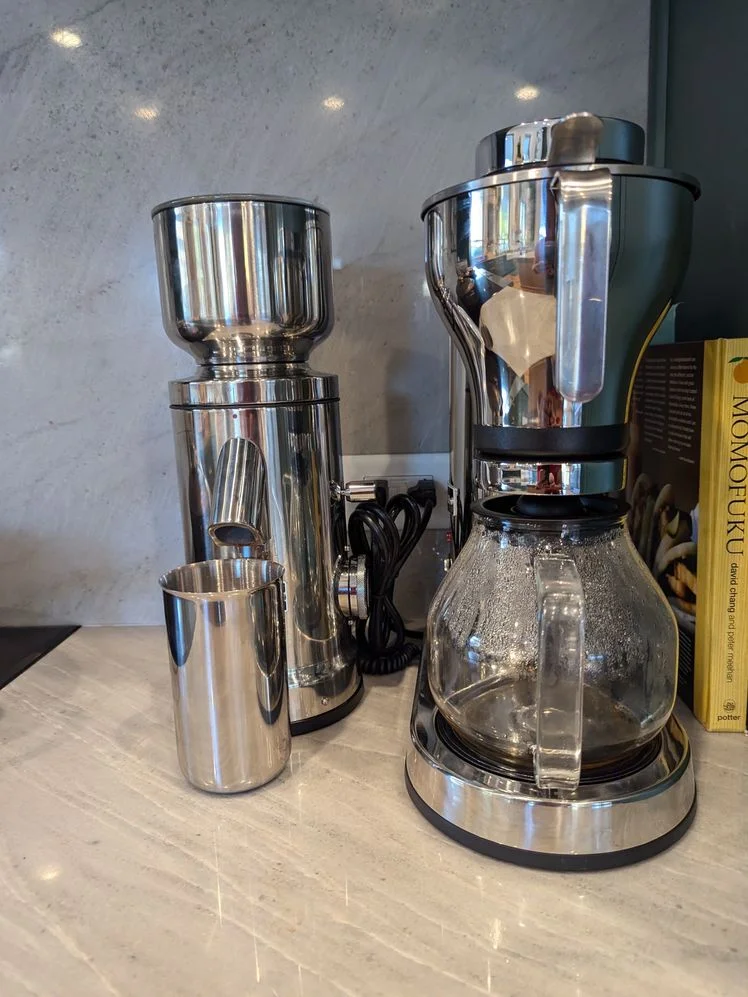
The Aarke machine is a beautiful, high-quality coffee machine, no doubt about it. It brews coffee with temperature control precise enough to earn it a rating from the Specialty Coffee Association and has a couple other nice features like a bloom function that you can toggle on or off by holding the single button on the machine. It's most effective when paired with Aarke's burr grinder, which can read how much water is in the dripper and grind coffee to match. You can read our review of the complete system here, but you don't need the grinder to make use of the brewer.
The issue with the Aarke is that it's not as customizable as the Fellow and, if you want a thermal carafe, will cost you quite a bit more than the Ratio Six. But if you're focused as much on aesthetics as you are on coffee, you might be ready to swallow the price bump.
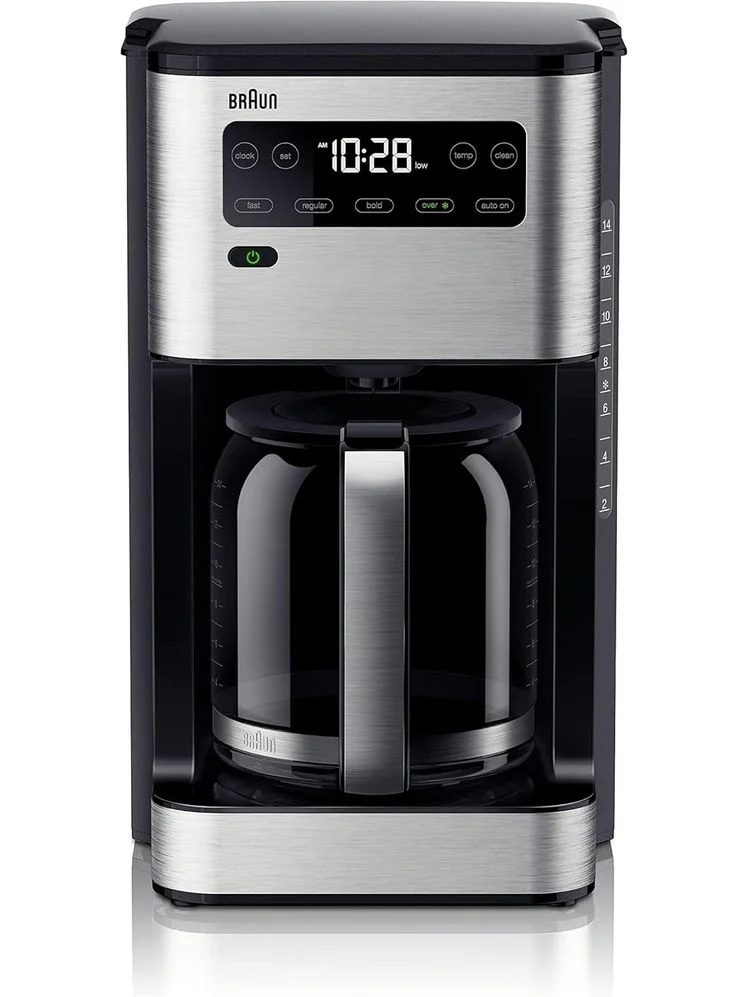
First the good: As programmable coffee makers under $100 go, they don’t come better than this Braun model, consistently priced below the Braun BrewSense we recommend up above. It can draw more flavor out of ground coffee than anything in this price range has business doing. The coffee bed showed no channeling, meaning even water distribution and better extraction. The machine has an alarm setting so coffee will be ready when you wake up and has three different brew settings, including “bold” and over ice (which produced better iced coffee than some much more expensive machines).
So why does the Pureflavor miss out on a spot as the top budget pick? Because of a design you might actually like but we do not: It has a touchscreen. Unlike the BrewSense, which uses tactile buttons, the Pureflavor has a touchscreen interface. That’s not a problem in and of itself—some people like touchscreens, some don’t. It does raise durability concerns though. We’ve used enough touchscreen items in our product testing (and had enough fail) that seeing one at this price point makes us cautious about recommending it.
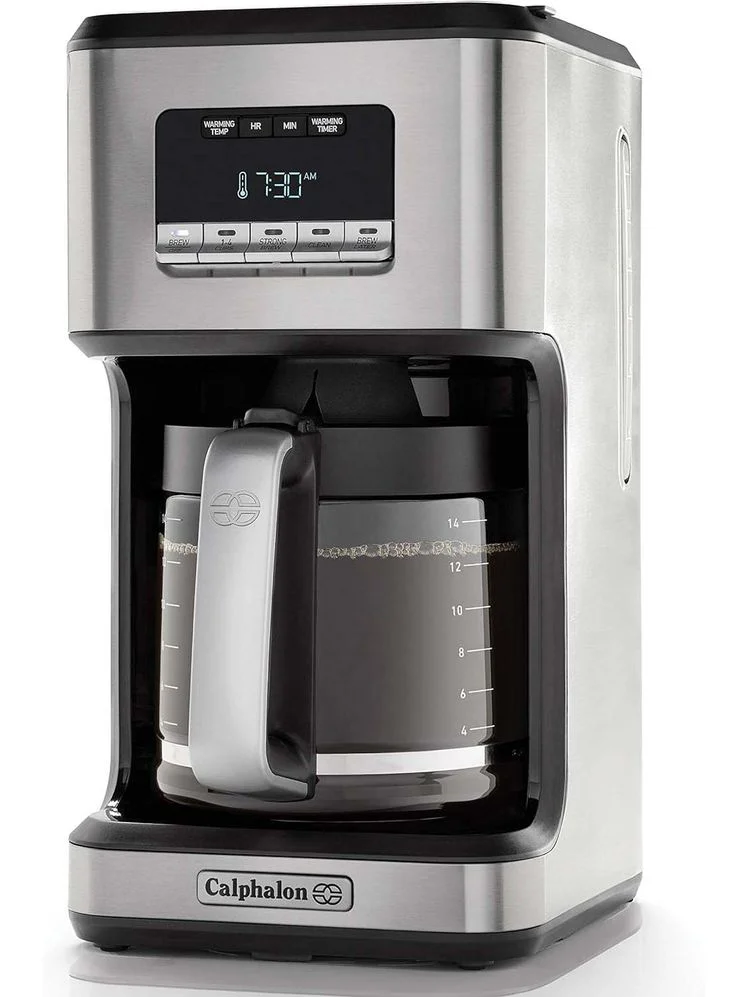
The Calphalon’s coffee was just as good as what we got from my favorite Braun machine: rich, flavorful, more than we typically expect from a cheap coffee maker. It also had the same features, including the different settings for the hot plate. We thought the Braun’s interface was a little easier to use—all the buttons are clearly labeled and in one line as opposed to the Calphalon, which has a couple buttons that felt sort of hidden away at the top of the machine. And while prices on these coffee makers can bounce around a little bit, the Calphalon is typically a little bit more expensive than the Braun.
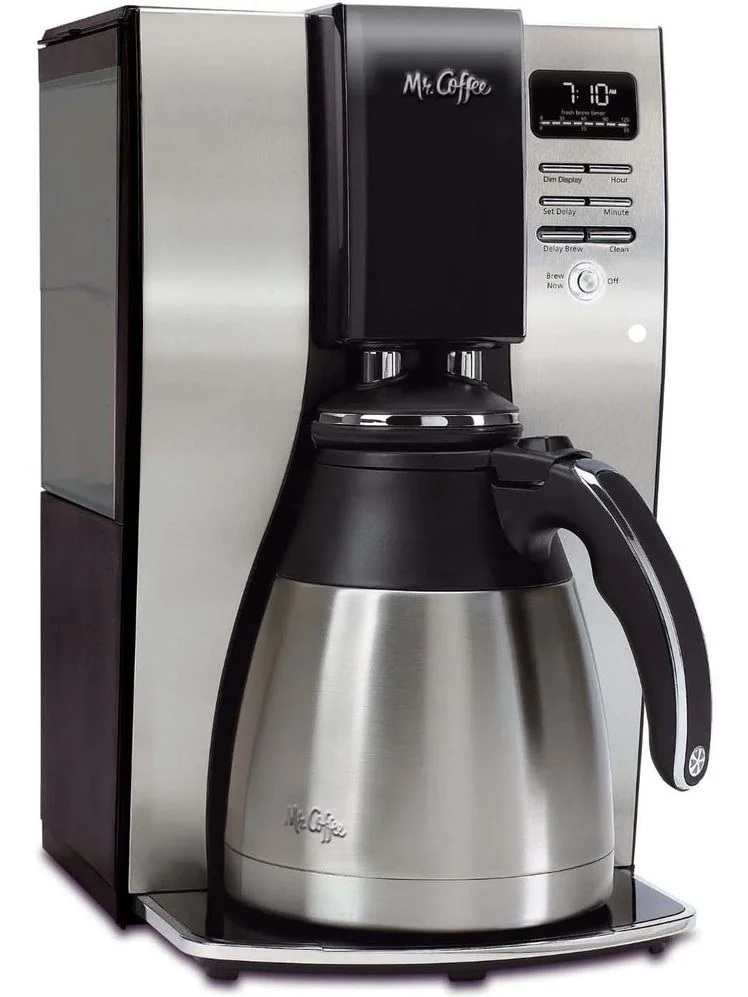
Mr. Coffee is sometimes used as shorthand for a cheap, meh coffee maker. But the brand has come a long way from the basic machine on your parents' or grandparents' counter growing up. This is still a very affordable machine, but comes with a thermal carafe that kept coffee warm for about an hour and a detachable water reservoir that makes it easy to fill without spilling. The coffee itself was on the watery side, but was still perfectly drinkable.
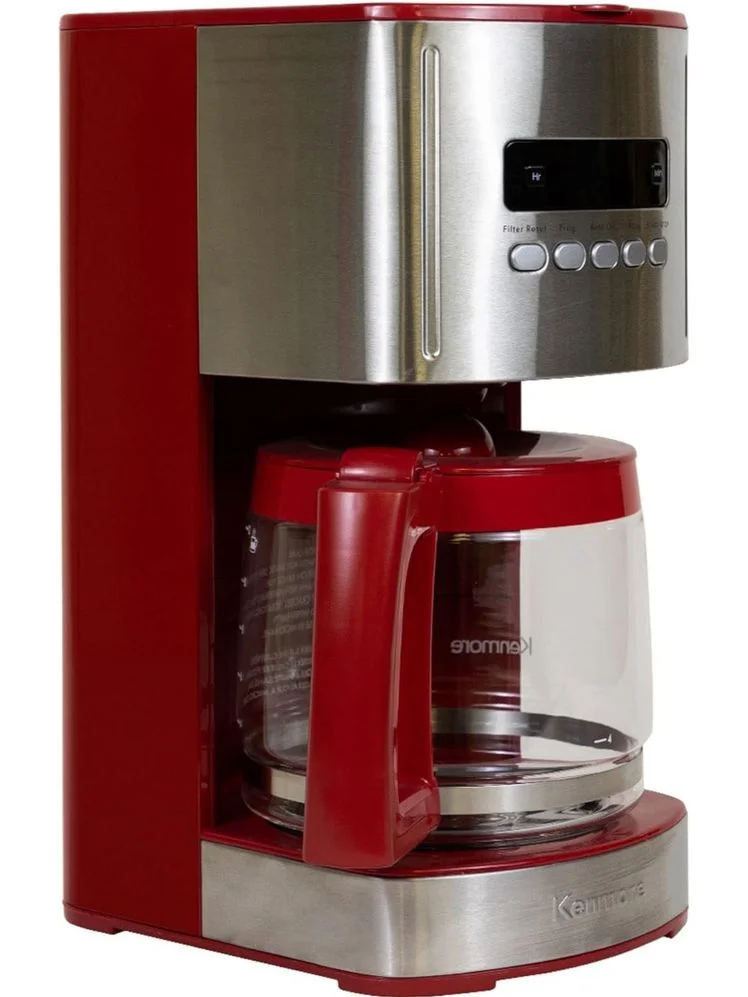
It comes with fewer features than either of the Braun coffee makers, but it produced coffee that ran close to them in terms of flavor. It has bold and 1-4 cup brew settings, making suitable for large or small coffee drinking households, and a simple interface that requires no explanation. It feels quite cheap—thin plastic and glass—but it also costs less than just about anything else we’ve tested, so in that way it meets expectations. If you’re looking for an alternative to the Zojirushi for some reason that’s just as inexpensive, you should be satisfied with this Kenmore.
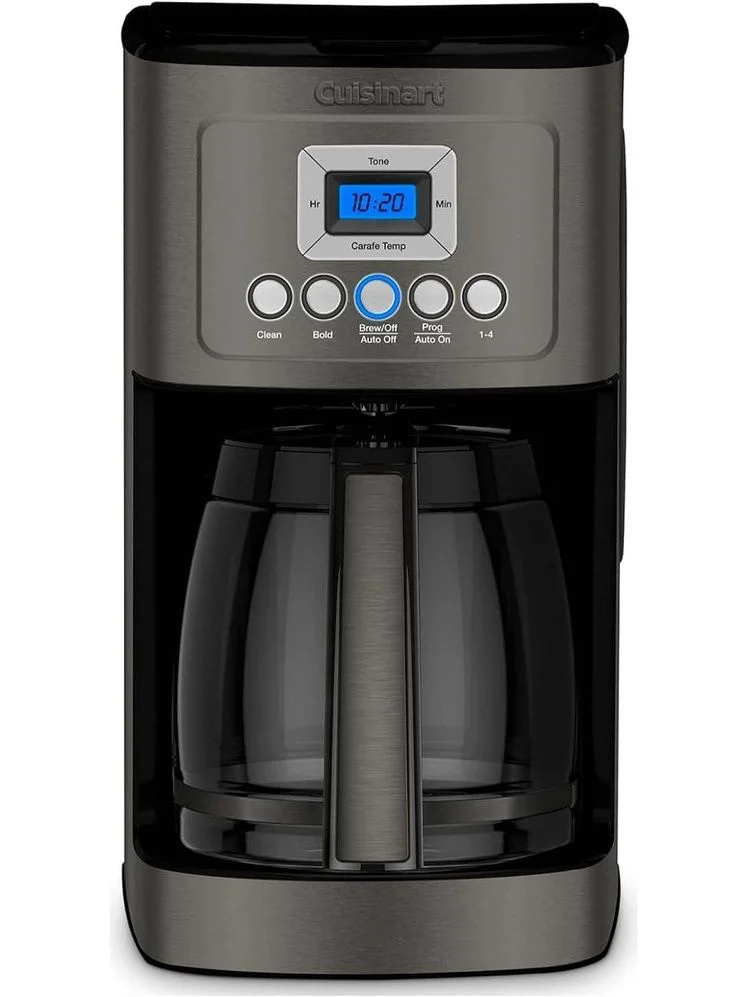
The big selling point of the Cuisinart Perfectemp is its size. It can brew 14 cups of coffee (that’s coffee-sized cups—five ounces, not eight ounces). It makes adequate tasting coffee, and the 1-4 cup setting, which adjusts the extraction time for less water, still produces flavorful results. We didn’t notice much difference when switching between regular and bold strength though. Ultimately, testers liked the flavor and the extra features of the Braun, which put it over the top here.
Drip coffee makers we don’t recommend
Even though some of the coffee makers on this list make coffee that’s tasty enough, they either lack the features, design, or value of the machines up above.
Braun’s OptiBrew Pro is trying to do a lot, and there are some aspects we loved, including smart water consumption from the reservoir (it only uses the amount for the desired cup or carafe size you select), sleek interface, and decent customization and programmability. However, among its many promises, it tries to masquerade as an espresso maker with “single shot” capability and an attached, foldaway milk frother. But the faux-spresso we got from it wasn’t satisfying enough to make us ditch our espresso machine. And wand-style milk frothers can be bought for under $10 and take up little space. We found the OptiBrew Pro’s operation a bit finicky, including the rear-mounted water tank and brew basket lid, which snapped closed and required a bit of effort to open. In other words, the lack of endorsement here does not come down to it being necessarily a bad coffee maker. Its added features just didn’t work well enough to justify paying more than you would for the BrewSense.
As budget coffee goes, what I got from the Ninja was good, not great. It was a little more watery, and even on the “rich” setting tasted flatter than some machines’ regular coffee. The removable side water tank is a nice design touch, it’s easy to take off, refill, and replace. But there’s better cheap coffee out there.
This is, to my knowledge, Mr. Coffee's first attempt to really play in the luxury coffee maker space. And retailing at $200 at the time of writing, it's definitely got the price tag to be there. In terms of performance the coffee was on par with lots of the mid-tier machines I tested—nuanced, sometimes fruity. It too uses SCA standards for its brewing.
The thing that should justify the jump in price from say, the $150 Zwilling machine above, is the Mr Coffee’s ability to make quick cold brew in under 10 minutes. But I found the cold brew a little bit flat in flavor. Fine in a pinch, and if you didn’t want to go to the trouble of using a cold-brew coffee maker, but not what you’d expect from immersion cold brew. If you’re planning to spend in this price range, a number of the coffee makers above will serve you better. Do note that this Mr. Coffee also has tea and iced tea settings, which, while I didn’t consider them here, do make this a pretty versatile machine.
This Mr. Coffee, unlike the more expensive models I tested, made passable coffee, but not anything I’d describe as tasty. It was a little on the watery side and there was some channeling in the coffee bed. The features were standard for a sub $100 coffee maker: a brew timer, a bold brew setting, and a 1–4 cup brew setting. Considering the competition here though, you’d have to grade on a pretty steep curve to give this one a passing mark.
The Bonavita One Touch has the same irritating problem of balancing the filter basket on top of the carafe that the Ratio machine does, but unlike the Ratio machine, it doesn’t brew coffee so good as to overcome that issue. The coffee tastes fine, the carafe holds in heat well for over an hour, and it’s super simple to use, but at this price point you can get something better from a Café machine or a refurbished Technivorm.
Despite being the biggest name in pour-over coffee, Chemex’s attempt to automate the process didn’t work out so well. Testers preferred the coffee from all of the Golden Cup machines to this one, which just didn’t have quite the nuance and depth of flavor. If you watch the machine work though, you’d assume it would. It allowed for a bloom period and the water flow started and stopped in a way that mimics making pour-over. The Ottomatic is compatible with 3-, 6-, and 8-cup Chemex carafes, though you can also get an included carafe with the machine.
This machine comes with a thermal carafe, which is a nice addition for a budget coffee maker, but the coffee tasted weak. It has a couple extra features like a timer and a reusable filter. This is a machine you wouldn’t be upset to find at an Airbnb or at your in-laws house, but I wouldn’t encourage you to run out and buy it for yourself.
This is the cheapest coffee maker I tested and it shows. It comes with a delay timer to set a brew ahead of time, but that’s it. The coffee wasn’t undrinkable, but it certainly wasn’t memorable—a rather flavorless way to fill your body with caffeine in the morning. Because the difference in price between this and what I consider a nice budget coffee maker is only $30 or $40, I don’t think this one is worth it.
Despite trying quite a few inexpensive coffee makers, I didn’t have much really bad coffee, except from this machine. It tasted like dirt. And not in a “mmm, I like the earthy undertones of this bean blend” dirt. Like actual dirt. It comes with a thermal carafe, which is impressive for a machine that costs around $60 at the time of writing. But you may want to fill that thermal carafe with coffee from a different machine.
Let’s start with the good: The Melitta coffee maker is the only one I’ve seen that allows different configurations. The control panel rotates 270 degrees on the base of the machine so it can stretch across the counter from left to right (easier to fill with water) or back to front (a more compact footprint for smaller kitchens). It’s also a good-looking machine—matte white with gold and wood accents.
But unfortunately the coffee was so-so. Even on the bold setting it lacked much flavor. The top of the fixed water tank was a little sticky and annoying to fill. If it cost $100 this would be a reasonable budget machine, especially with its aesthetics, but with prices ranging from $140 to over $200 depending which retailer you go to and which color you choose, I think there are better choices out there.
Drew Barrymore’s Walmart-only brand has produced a couple of hits in our product testing, most notably its stand mixer. Aesthetically, Drew’s drip coffee maker has the soft lines and color palate that could make it very appealing on the counter, and a set of features that usually cost 30% or 40% more, like a 1–4 cup brew setting and three variable brew strengths. But the coffee just didn’t have much flavor. It makes me think the heating element just can’t produce water that’s hot enough to properly extract the coffee. If price is the main driver of your coffee maker purchasing decision, it’s absolutely worth spending $35 or $40 more to get one of the Zojirushi coffee makers or the Braun Pureflavor.
Like most of the coffee makers I don’t recommend here, the Ninja didn’t make terrible coffee, it made bland coffee. It has a few convenient features: A very small footprint considering its jumbo 14-cup capacity and a removable water tank that makes filling it in the morning easier than most coffee makers in this price range. But even coffee brewed with the “rich” setting tasted rather watery. There are a whole range of machines that brewed up better pots for the same cost or less, so I recommend you try one of those.
FAQs
How do I make the best coffee with my drip coffee maker?
The flavor of your drink will largely depend on the coffee you’re using, the quality of the hot water you’re using (this really does make a difference), and the ratio of coffee to water.
To make the best-tasting cup, always use freshly roasted, high-quality coffee beans at a medium grind size—buy whole beans and grind them right before you brew your coffee (here are our favorite coffee grinders). If you want to keep your beans fresher longer, keep them in a vacuum sealed container like this one.
Use filtered water; some drip coffee machines have a built-in water filter that will take care of this for you (just remember to change it out as directed). You’ll also want to use a scale to measure a coffee-to-water ratio of 1-to-16, or 16 grams of water for every gram of coffee. Start with this ratio, then feel free to play around and adjust according to your preference.
Specific brew temperature is also important for proper flavor extraction so, if you can, go with a drip coffee maker that has precise temperature controls or at least an accurate thermostat that controls the temperature within a small window, like one our top picks..
What does it mean for a machine to be SCA certified?
SCA stands for the Specialty Coffee Association. "SCA certified" is a technical designation, but the short version is this: The coffee maker can consistently brew a pot that meets a set of quality standards established by coffee pros. That includes maintaining a steady brewing temperature between 194°F and 204°F and achieving an even extraction of soluble compounds from the grounds.
Should you use those reusable, mesh filter baskets
In terms of quality, we've found these mesh baskets generally produce worse coffee. The mesh, especially in the cheap coffee makers that usually use it, is frequently not fine enough to keep coffee solids out of the final product. If you have one, you can see this yourself by swishing around the last dregs of the carafe or your cup. You'll probably see a thin layer of coffee sludge on the bottom.
Unbleached paper filters do a better job of producing clean coffee and, from a sustainability standpoint, are compostable. There's some debate about whether unbleached filters impact the flavor in problematic ways, but we've used them regularly and haven't noticed a large impact. For drip coffee makers both Melitta (used in this test) and If You Care make filters our editors use often.
Get to you know your reviewer
Noah Kaufman: I’ve been helping leading product testing and reviews at Epicurious and Bon Appétit since 2021, during which time I’ve drowned myself in coffee, for both professional and personal reasons. In my kitchen I now have six different ways to brew it and a weekly influx of beans from roasters and regions all over the world.
Complete your coffee setup
- The best coffee grinders may be even more important that the best coffee makers
- Never be without freshly roasted coffee beans again
- The best travel coffee mugs for the car, the train, and your daily desk caffeine