How Oscar Winner Tamara Deverell Built the Beautifully Brutal World of 'Frankenstein'
Fresh off her Academy Award win, the acclaimed production designer reveals the historical research, Kubrick connections, and creative magic behind the film's stunning sets.

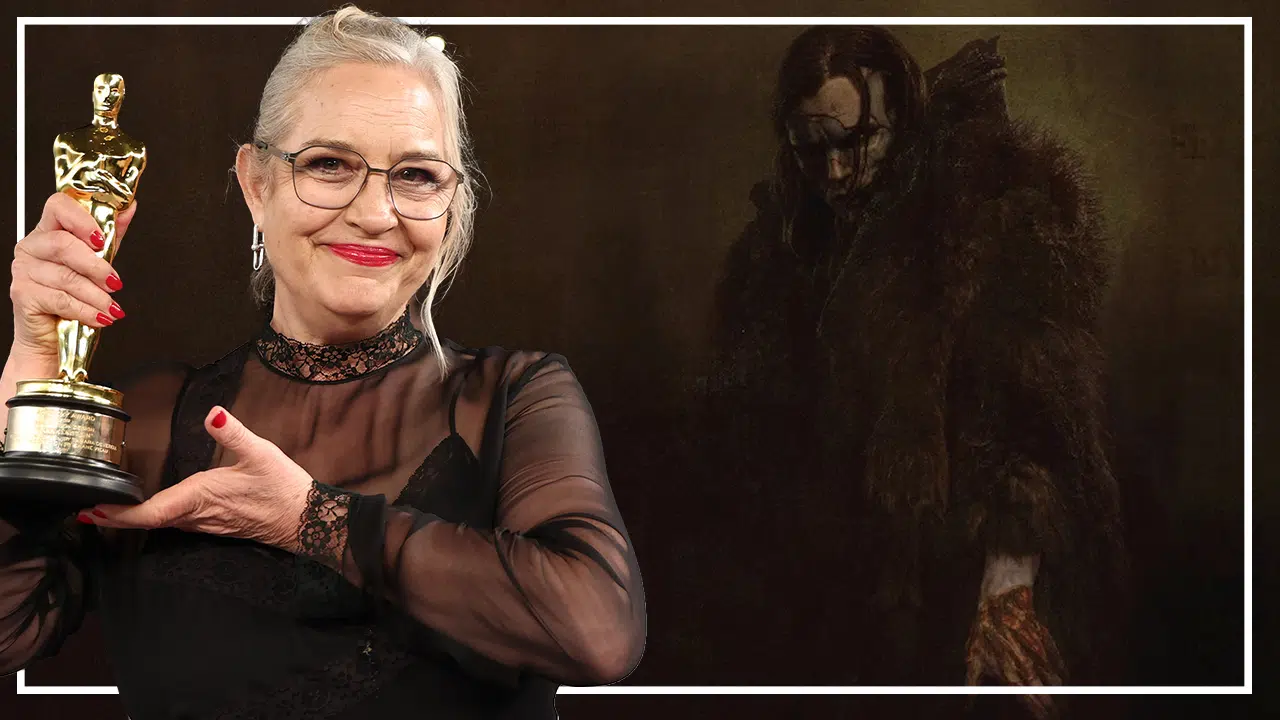
Picture Credits: Netflix / Getty Images
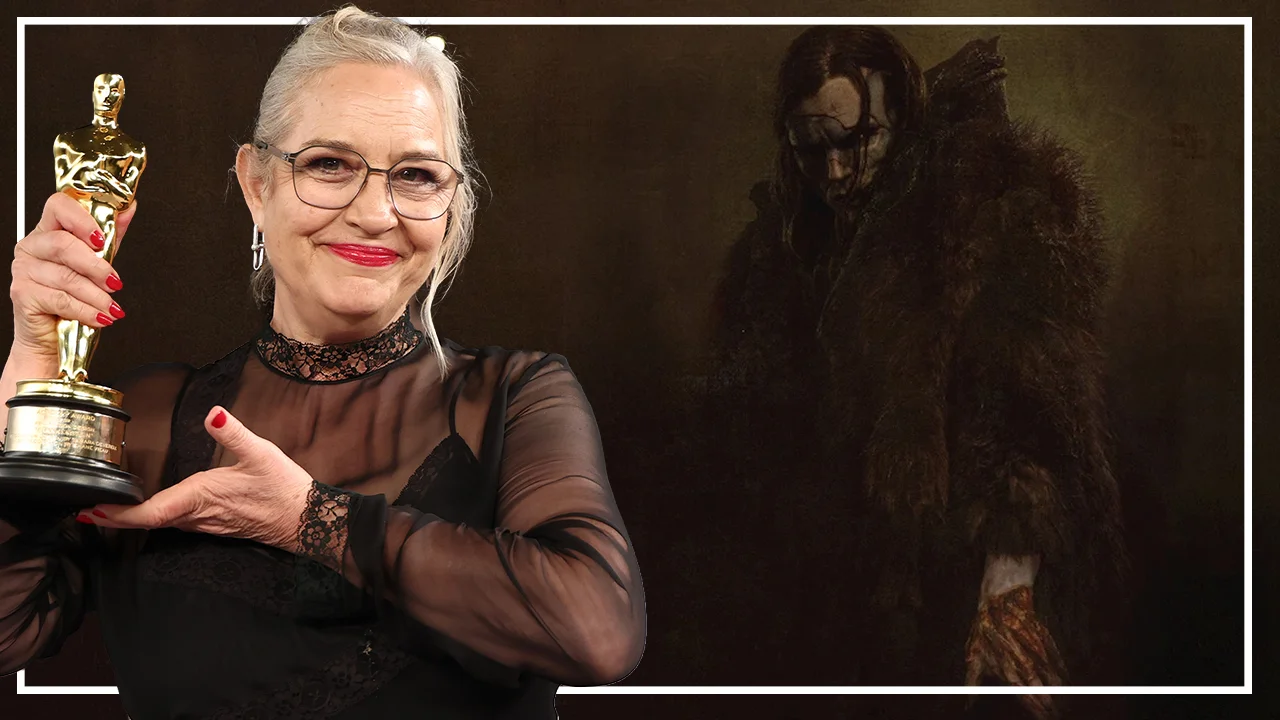
Tamara Deverell claimed her first Oscar for production design on Frankenstein, sharing the honor with set decorator Shane Vieau. The win marks her second nomination, following her work on Guillermo del Toro's Nightmare Alley.
Deverell's collaboration with del Toro stretches back to the '90s, beginning with the creature feature Mimic. Their partnership has since yielded visually arresting projects including Guillermo del Toro's Cabinet of Curiosities and this Mary Shelley adaptation. Shortly after her Oscar triumph, Deverell sat down with What's On Netflix to discuss the craft behind the Best Picture-nominated film.
In your acceptance speech, you called the film "a fantastic operatic ship." Opera seems central to Guillermo's vision. How much does that sensibility shape your design work?
Enormously. The operatic quality wasn't explicit from the start—Guillermo didn't announce, "This needs to be operatic." It emerged through conversations about theatricality and human drama. Once Alexandre Desplat's score came in, that operatic dimension became undeniable. Though of course, I don't have that music during the design phase.

I told Alexandre I wished I'd had the music earlier for inspiration. On Nightmare Alley, Guillermo had curated songs he planned to use in the final cut, which was wonderful to design to. But Alexandre can't deliver his score until the film is assembled.
You approach design through historical accuracy while Guillermo works from cinema history. How do those perspectives merge in Frankenstein, which feels both expressionistic and period-authentic?
Guillermo gravitates toward fantasy. Interestingly, when we submitted for awards—the Art Directors Guild, British Film Designers Guild—they categorize films as contemporary, science fiction, fantasy, or period. To me, this was always a period film.
Netflix, helping with submissions, suggested sci-fi fantasy since, obviously, people weren't creating monsters. But I always saw it as period. The decorator and costume designer Kate Hawley felt the same. We pushed into the fantastical, but everything remained grounded in what was plausible for the era.
The steam engines in the lab, the battery towers—they're exaggerated, but rooted in reality. That kind of experimentation existed during the Industrial Revolution, which coincided with the late Victorian period.
Guillermo shifted the timeline from Mary Shelley's early 1800s setting to the mid-1800s, giving us access to more advanced industrial technology and the advent of electricity.
He's the one who pushes toward the fantastic, but he encourages all department heads to establish historical groundwork first. Then we leap into the fantastical.
It's a seamless process: research thoroughly, establish accuracy, then expand. I'm a firm believer in research. I tell young filmmakers that research isn't just internet browsing.
Go to the library.
Exactly. Travel when possible. Study nature. Keep your eyes open constantly. Examine people, vintage catalogs, everything. It's all research, all essential to an artist's or filmmaker's process.
So Guillermo brings the fantastical, the operatic, the theatrical—pushing boundaries. Those of us working with him stay more grounded in reality. What's practical lighting for the period? We mixed candles with propane and gas lanterns, developing that approach with cinematographer Dan Laustsen.

FRANKENSTEIN. (L to R) Jacob Elordi as the Creature and Oscar Isaac as Victor Frankenstein n Frankenstein. Cr. Ken Woroner/Netflix © 2025.
Dan mentioned Barry Lyndon extensively when we spoke. That Kubrick film seems to be every cinematographer's touchstone.
We referenced Barry Lyndon constantly because of its famous candlelit cinematography. They used an extraordinary number of candles. By today's fire safety standards, you need the fire department on set with that many open flames. Here's something you might not know: we actually shot in one of the rooms at Wilton House where Barry Lyndon was filmed.
That's amazing.
Guillermo was thrilled to take on the challenge. We used many of the same grounds and exteriors, including the Palladian Bridge that featured prominently in Barry Lyndon—an ancient stone bridge spanning a river on the estate. The Double Cube dining room became Victor's family villa dining space.
After the parents' death, young Victor appears sprawled against a massive built-in sofa in that room. The space itself is largely immutable—we transformed it through set dressing, converting what's actually a sitting room into a dining area, but that iconic couch remains fixed in place. You'll recognize it from both Barry Lyndon and our Frankenstein.
You mentioned the importance of being open to what you discover on location, going beyond web research. What were your key sources of inspiration for Frankenstein?
During our initial scouting trip, Guillermo, Guy Davis (Guillermo's longtime concept artist), J. Miles Dale (our producer), and I explored potential London locations—ballrooms and such. Guillermo ultimately rejected them after reviewing photos, citing London's notorious traffic. But he insisted we visit the Hunterian Museum at the Royal College of Physicians and Surgeons.
We arrived just before their official reopening following a major renovation—literally two days early. We pleaded our case, explaining our tight London schedule, and they graciously admitted us. For me, the timing proved serendipitous: watching curators in white gloves carefully positioning precious artifacts as they finalized the installation was fascinating.
The museum houses authentic Evelyn tables—the inspiration for the one we created—along with period medical implements and instruments. While their collection spans multiple eras, I focused on items from our time period and earlier, photographing every relevant object.
How did the University of Glasgow influence the production?
During our Glasgow scouting trip, we discovered a pavilion with a stunning vaulted ceiling. We wanted to shoot there, though we hadn't yet written a scene for it. The producers ultimately vetoed the location—traveling that distance for a brief, dialogue-free scene didn't make logistical sense. But that vaulted ceiling architecture stayed with me and evolved into the design for the creature's cell.
The dungeon has an almost anatomical quality—as if the creature is imprisoned within a body.
As I developed the design, I recognized the vertebral structure emerging. The question became: how do we emphasize that skeletal quality while keeping it subtle? The tilework became our vehicle for nodding toward human anatomy, toward the essence of Frankenstein itself. We chose translucent tiles in tones that echoed—without directly matching—the creature's own skin. Mike Hill's prosthetic work informed our palette.
We aged everything carefully to avoid overwhelming the frame—the creature needs to command attention in that space. Elizabeth needs to stand out. The costumes must pop. There's a constant calibration in production design: being present without dominating, ensuring the audience feels the environment in every frame, whether in close-up or wide shot, without upstaging the performances.

You and Guillermo create such cohesive worlds together. When does a world feel fully realized to you both?
With Guillermo, because we understand each other deeply, it transcends color palette—though that's certainly part of it. It's about tone, texture, and layering. Multiple layers of paint create the ambiance of an 18th-century painting, which Dan's lighting enhances. That quality of layered texture and paint tones is where Guillermo and I connect most profoundly.
When I first worked with him on Mimic, we were designing old subway tunnels and pipes, applying extensive aging. We had an exceptional scenic artist, John Bannister—sadly no longer with us—who shared our passion for tone, texture, and detail.
Guillermo examines everything. From our first collaboration to today, he never dismisses anything as beneath his attention. Every morning during filming, I meet with him after he sets up the shot, while Dan lights and the crew makes final adjustments. I get my 15 minutes to half hour with my iPad—sometimes I bring large prints, but the iPad usually works better.
We review upcoming elements together. "Guillermo, I tried some moss"—because we'd discussed moss, and he'd had a "moss squad" on Pan's Labyrinth. We assembled our own moss squad and I placed some in the creature's cell with our greenery team. It was collaborative. I showed him photos and we both got excited—more, more, more. Always this give and take, but mostly just flowing together.
Your collaborations have a visual continuity across projects.
He loves arches. The circle motif is important to him. I incorporate those instinctively now—no discussion needed, I just do it.
Many Canadians in the industry celebrated your Oscar win. What does it mean to you as a Canadian artist?
I try not to be overly nationalistic, but something struck me at the Oscars, at the women in film events and luncheons—people came from everywhere. I realized we're part of this vast, complicated world we're all trying to navigate. I felt proud not just as a Canadian, but as part of a global community representing so many different backgrounds.
I recently relocated full-time to Nova Scotia. In the Oscar press room, I spoke about the provincial government's cuts to arts and culture funding. It went viral in Nova Scotia—Tamara Deverell, the Oscar, and Premier Tim Houston all became linked in the conversation. The timing was significant.
Bringing this home to Canada feels special. My co-nominee is Canadian. About 80% of our crew was Canadian. We shot in the UK with an international team: our Danish cinematographer, our costume designer from New Zealand, Mike Hill from the UK originally, Alexandre from France, and our Mexican director. I love that diversity. I love working with Guillermo—he's truly an honorary Torontonian, if not Canadian. Coming home with an Oscar to Canada means something.

LOS ANGELES, CALIFORNIA – MARCH 15: (L-R) Tamara Deverell, Ted Sarandos, Netflix Co-CEO, Shane Vieau, and guests attend the 2026 Netflix Oscar after party at The Living Room on March 15, 2026 in Los Angeles, California. (Photo by Charley Gallay/Getty Images for Netflix)
Congratulations on your well-deserved win, Tamara.
Our flight to Halifax got turned around mid-approach due to bad weather. Miles Dale, our producer, had suggested, "Bring out the Oscar on the plane—it's really fun." So as we were literally banking away from Halifax, heading back, I thought: this is the moment. Everyone's disappointed, let's lift spirits.
I brought out the Oscar and announced, "Hey everybody, I won an Oscar. Come take a photo." It passed around the cabin, everyone taking pictures. The next day, when we finally caught a flight—nothing was landing in Halifax because of the winds—we had the same passengers. The Oscar made the rounds again, even visiting the cockpit. It was lovely.