The Secrets Behind the Stunning Visuals of The Oscar-Winning 'KPop Demon Hunters' With Gary H. Lee
Cinematographer Gary H. Lee reveals the creative process behind the film's wild bathhouse fights, stadium concerts, and shallow-focus romance.

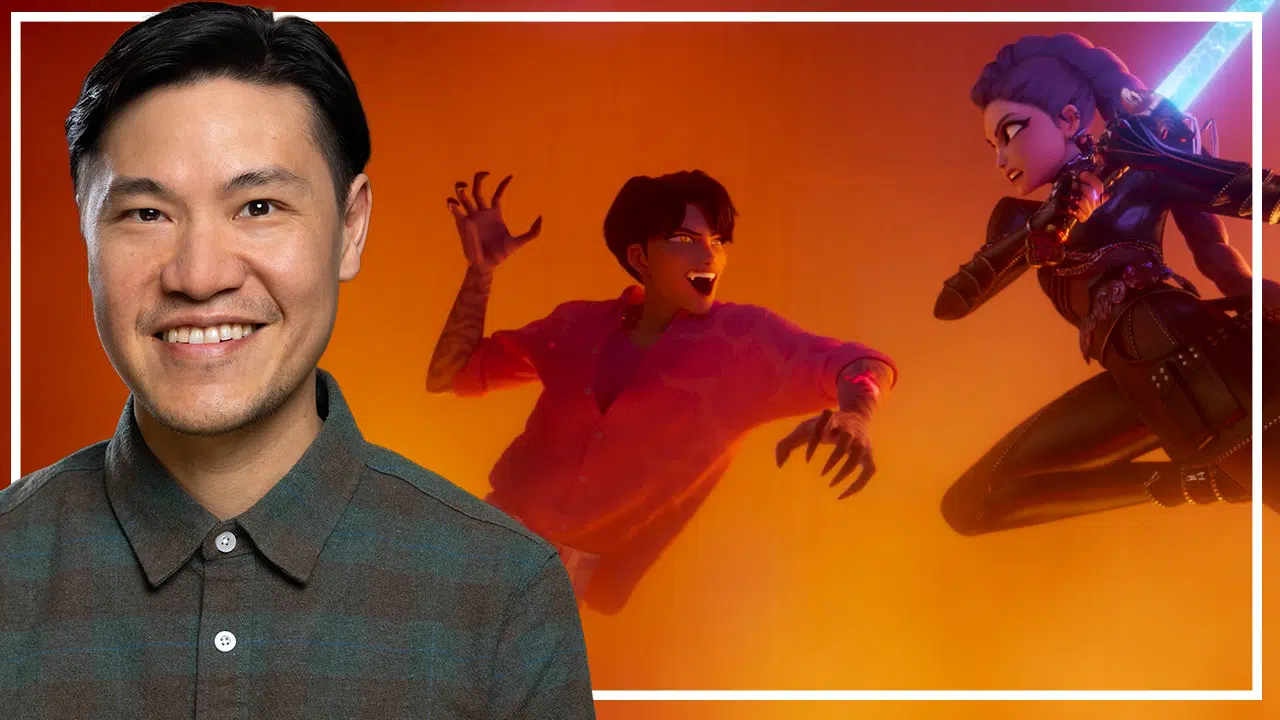
Pictures courtesy of Netflix and Gary H. Lee
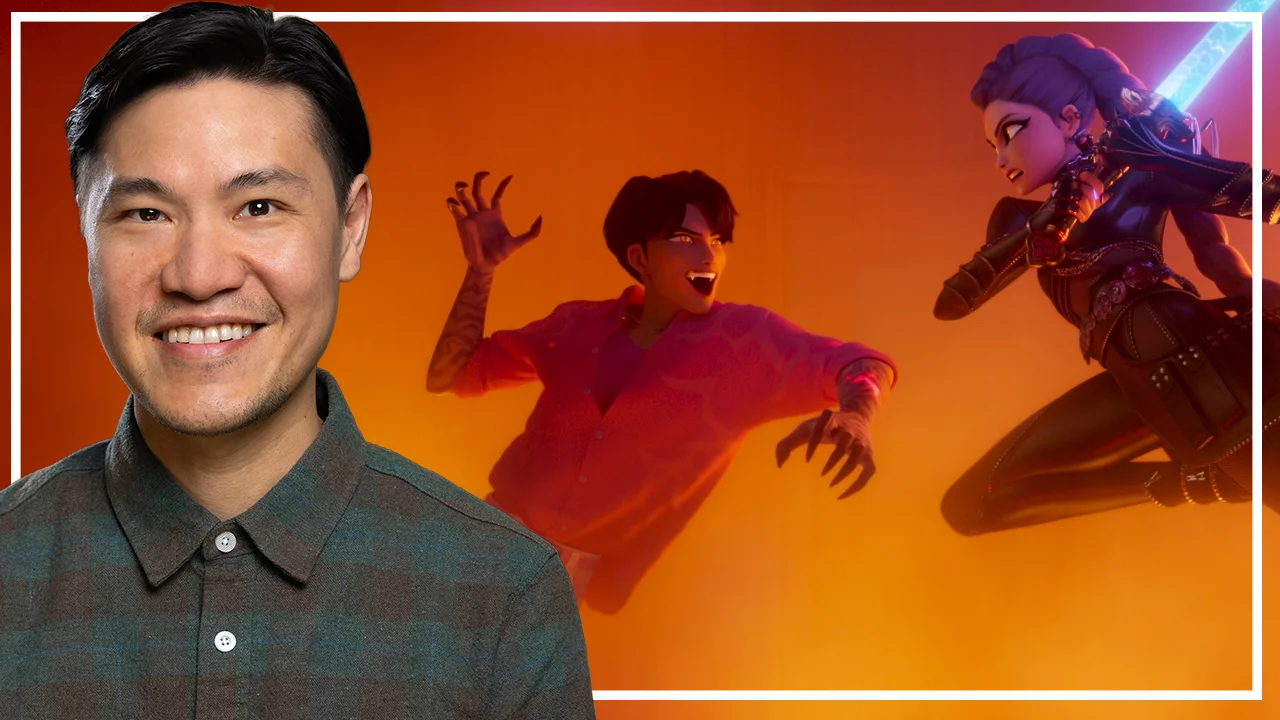
KPop Demon Hunters demanded visual versatility from cinematographer Gary H. Lee. The Oscar-winning animated feature shifts between demon-slaying action, K-drama romance, and stadium-scale concert spectacle—each requiring its own cinematic language.
Lee and his team earned a Visual Effects Society nomination for Outstanding CG Cinematography before the film took home Best Animated Picture at the Academy Awards. Shortly after that win, he spoke with What's On Netflix about crafting the film's distinct visual identity.
His background in visual effects—including previs work on the Star Wars prequels, Life of Pi, and Kung Fu Panda—prepared him for KPop Demon Hunters' ambitious scope.
What were the final touches you, directors Maggie Kang and Chris Appelhans, and the team worked on?

From the camera standpoint, once we complete rough layout blocking—determining how we'll shoot the film—much of it builds on the storyboards. There's always a camera polish pass at the end.
We block cameras during rough layout, then animation takes over and works within those shots. Eventually, we apply final camera work on top of the finished animation. Sometimes you add touches that make the camera feel tangible and stylistically aligned with the scene's theme.
In animation, cinematography splits into camera and lighting. In live-action, a DP handles both simultaneously. But animation's technical constraints divide the process across departments.
We set up cameras and do blocking, then animation starts work that can take months. When animation finishes, lighting takes over—often collaborating with the production designer on color keys. Everything converges at the end to produce the final frame.
©2025 Netflix
How did you make the camera feel tangible in KPop Demon Hunters?
I do a cinematic pitch for each project. It's a conversation with the director and creative team about the film's potential. Every film has its own DNA. Our job is making sure the cinematic language reflects the content.
For KPop, you have live concert events, flashbacks to ancient times, KPop music video aesthetics with dynamic choreographed camera work, and K-drama sensibility for Jinu and Rumi's dates.
A lot of stories to tell.
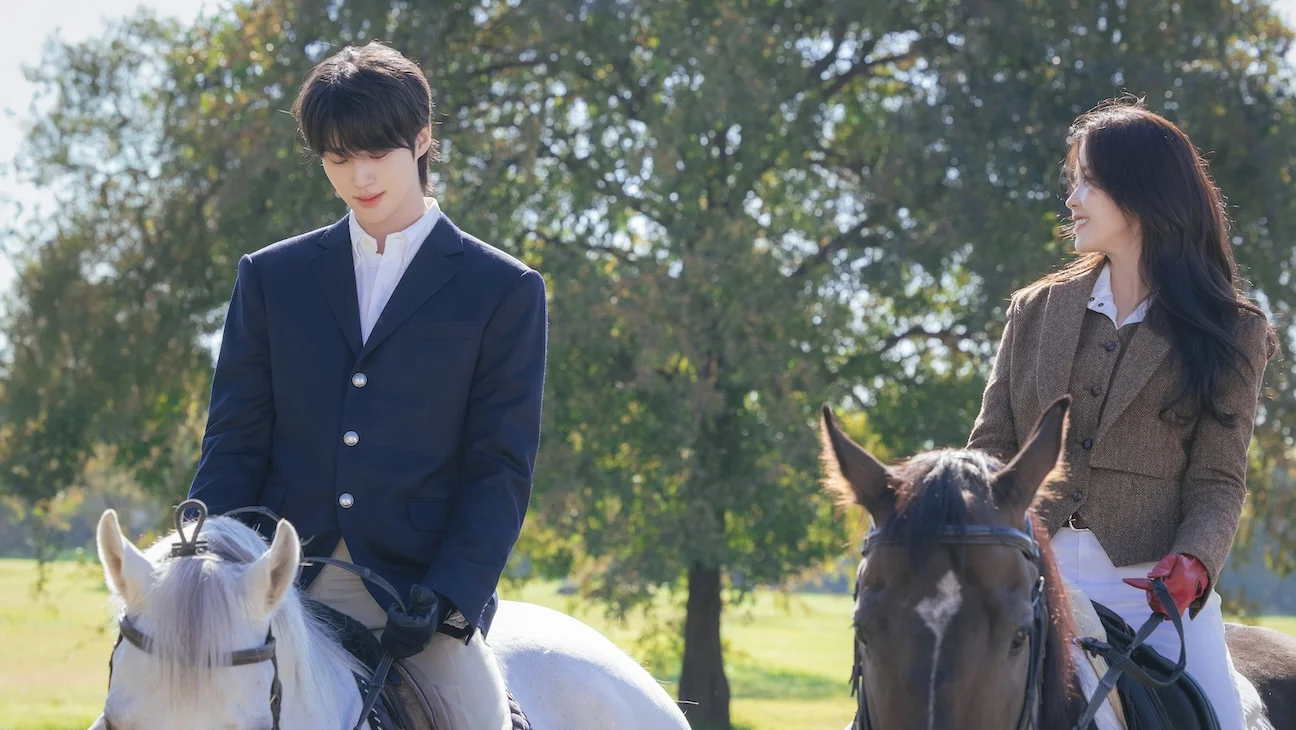
K-dramas sometimes work with limited budgets. They'll shoot at locations without permits—small crew, two people talking, everything behind them blurred out. Really shallow depth of field, big bokeh. That becomes its own visual language.
KPop Demon Hunters embraces multiple tones fearlessly. That gives us a vast palette for using the camera to tell the story. We use long lenses for intimate K-drama moments. Live concerts and game shows also use long lenses, but everything stays in focus. Game shows want everything sharp.
What about the action scenes?
In action sequences, every rule goes out the window. We don't worry about lens choice. As long as the shot delivers dynamic, punchy, well-choreographed action, we don't constrain the camera.
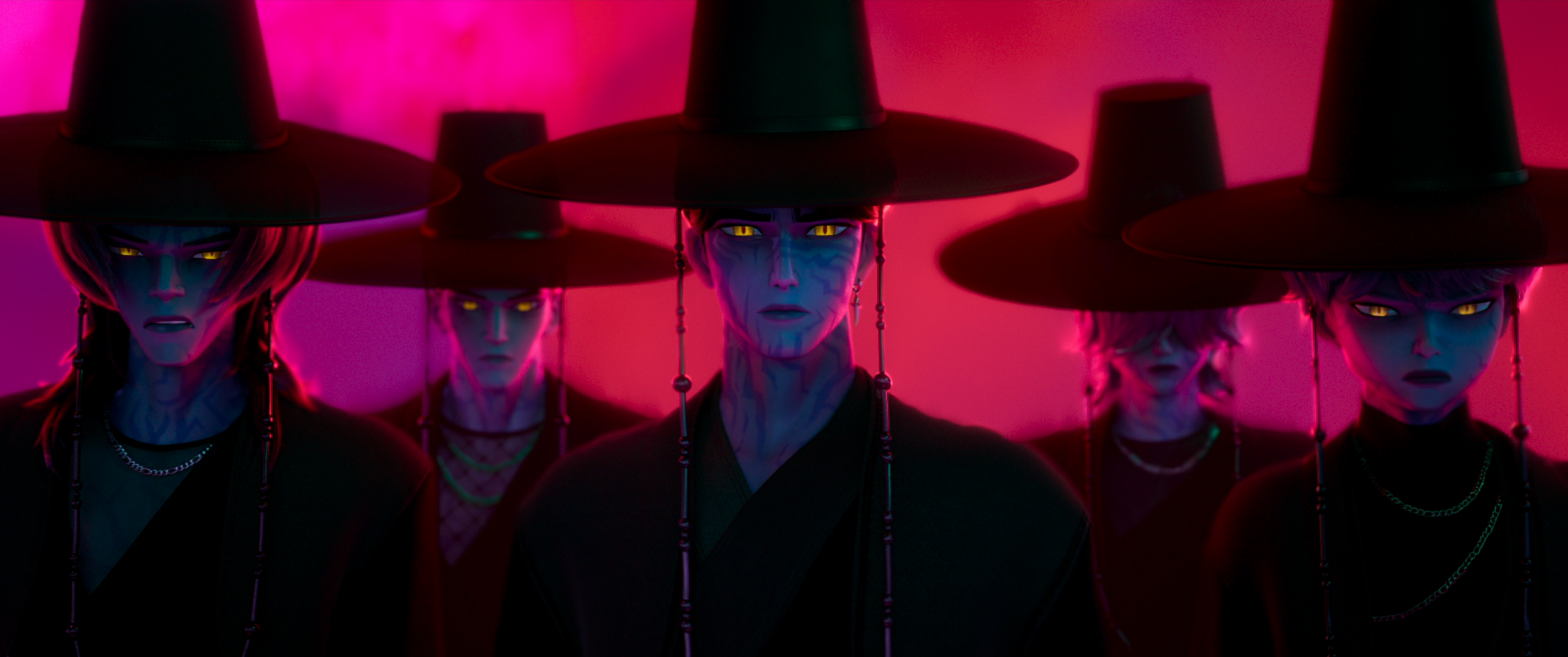
The bathhouse sequences presented unique cinematographic challenges—water, reflections, steam, demons, and bold color choices. Chris cited Eastern Promises as a key influence for those scenes.
Eastern Promises was one of the early references given to me. Actually, Oldboy as well. They were willing to go pretty raw on a visual level—not the content, but the aesthetic. The bathhouse has a lot of atmosphere. You have the greens, the oranges. A lot of the color choices go to the production design team.
What I can speak to is that during scouts, we'd say, "Let's channel Wong Kar-wai here." I'm jumping to a different sequence, but when Rumi and Jinu are at Bukchon—whether under a street lamp in an alleyway or on the rooftops of those historic buildings—we'd set it up, step back, and go, "Wow, that looks like Wong Kar-wai."
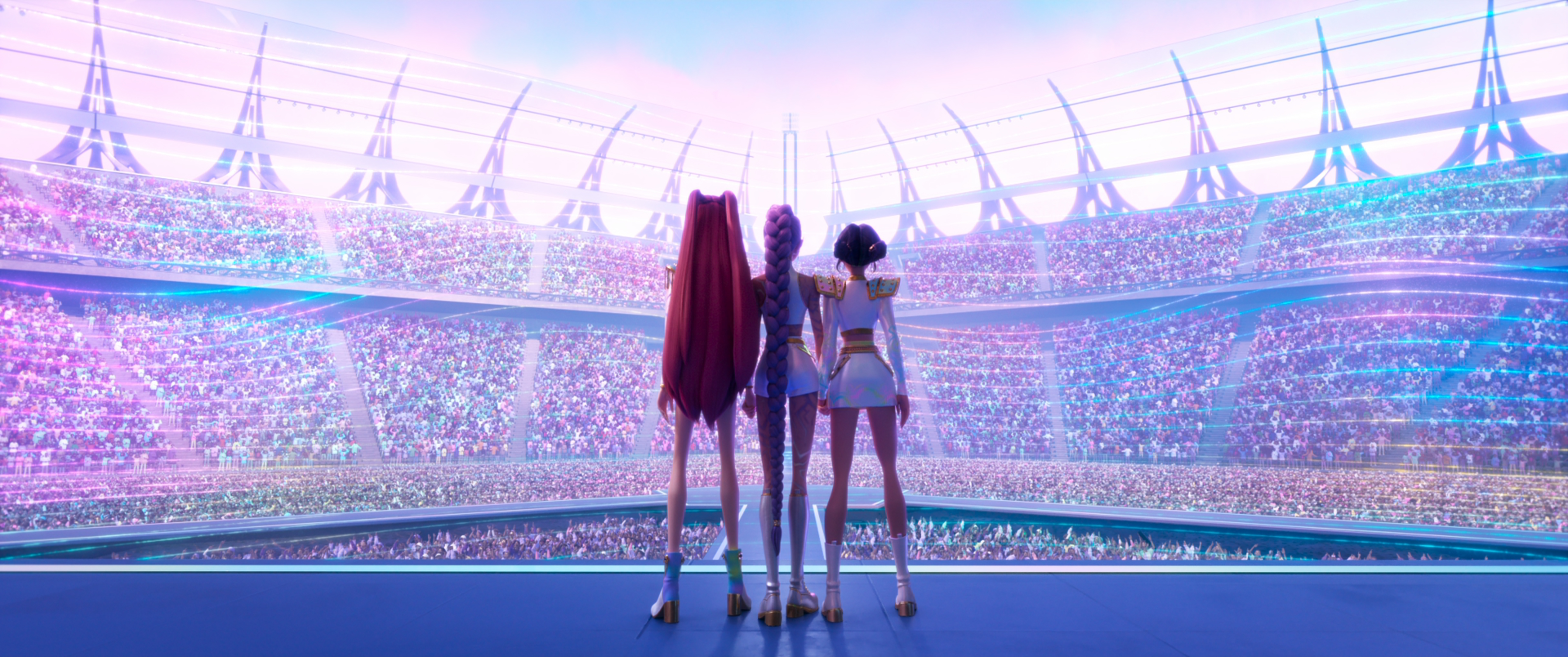
KPOP DEMON HUNTERS – When they aren't selling out stadiums, Kpop superstars Rumi, Mira and Zoey use their secret identities as badass demon hunters to protect their fans from an ever-present supernatural threat. Together, they must face their biggest enemy yet – an irresistible rival boy band of demons in disguise. ©2025 Netflix
When you say Wong Kar-wai, you imagine the slightest gesture having major impact.
Exactly. One thing we noticed in K-dramas is they exaggerate the smallest interactions. In Western drama, characters just go for the kiss, go back to their house, and that's it. With Asian drama, even the slightest handshake or touching hands—it's like, "Whoa, did they just do that?" That's fireworks. We're definitely paying attention to those close-ups, making a huge meal out of something that feels very restrained. It speaks to the cultural aspect of connection.
When you've got Rumi, Mira, and Zoe around a dinner table, what does that require as a cinematographer?
When Rumi was down and lost her voice at the Korean restaurant, that scene took a very long time to shoot. It's an intimate sequence, but you're trying to capture how Rumi, Mira, and Zoe each feel differently at that table. It started very early and didn't wrap until much later because of the density in the restaurant.
How shallow is the focus? What's behind them? Is it just a conversation with the three of them? There's a fridge in the background emitting too much light, too distracting, so let's turn that off. There's so much thought that goes into that. Also, how they posture themselves reveals so much of each girl's personality.
Were there any colors you wanted to chart their journeys?
I have to defer to Helen Chen and David Bleich, the production designers on the show. Traditionally in animation, color is owned by production design. I do see that even on the film I'm on right now, there's beginning to be collaboration between production design and cinematography talking about light.
Again, it's all due to the fact that traditionally animation is such a separate process. Because of the Unreal Engine now, we can do real-time interactive lighting. I see the future where the cinematographer on an animated film is starting to become a real cinematographer in the traditional sense—someone who's in control of the camera and lighting. On KPop Demon Hunters, my job was blocking cameras, lens choices, f-stops, all those things.
Are you excited about the process becoming less separated, where cinematography in animation is going?
I'm very excited about where this is all going. In fact, I'm personally doing a bit of a push to have cinematography as a category in awards.
That's great.
Because ever since the very first Toy Story, 3D previs and layout cinematography have become a pivotal part of animation. It's been three decades, and I think people are still thinking about animation cinematography as traditional layout, which is something done in 2D.
Ever since the beginning of 3D animation, we've had a virtual camera that we're moving, staging, and making choices on lenses like in live action. The light is still not a possible realm because lighting wouldn't start until eight months later, so it's a different department that takes care of that.
Because of Unreal Engine, now you can literally set up your shot and light your shot right there. It will get you 75–85% to what the intent of that shot is, then it becomes meaningful information to go down the pipe. So, to answer your question, am I excited about the next chapter of cinematography in animation? Very much so.

KPOP DEMON HUNTERS – (L-R) Rumi (voice by ARDEN CHO), Zoey (voice by JI-YOUNG YOO) and Mira (voice by MAY HONG) . ©2025 Netflix
Speaking of the future, you worked on a project that paved the way for where digital filmmaking and VFX is today: the Star Wars prequels. When you worked on Episode II in particular, did you see glimpses of the future of where filmmaking is today?
Oh my God, that's a lot to unpack. I really felt I was born at the right time, the right place. At the time, the industry was looking for people to do not final animation, but something crude enough that you can tell a story.
When I was working on Star Wars: Episode II – Attack of the Clones, Francis Ford Coppola would come by and talk about how he invented the word "previsualization." People didn't understand it. If it's already visualized, then how do you pre-visualize it?
When I was at Lucasfilm, it was with a group of people on that film that really helped define the new generation of cinema. I'm talking about 10 to 12 people, and I feel extremely honored to be part of that. They all became industry giants. There are previs companies like The Third Floor, HALON Entertainment, and people who came off that group went on to work on all the Marvel films.
George Lucas really had it down. He kept pushing the industry forward, especially with the transition from film to digital cameras, which also happened on Episode II. It set so many milestones in a single picture.
It did. He's really the Walt Disney of filmmaking. As a Lucas fan, I had to ask, so thank you. To conclude with KPop Demon Hunters, how exactly did Oldboy influence the film?
Right after the bathhouse fight, Rumi was chasing Jinu down a hallway. It never ended up going there, but in earlier iterations there were thoughts of doing one of those profile shots of them fighting in the hallway. Oldboy had that really iconic shot, almost like the camera's inside the wall and you watch this fight go down.
The tone and the energy, all of that, is so different. I would say the biggest takeaway is the texture of the sequence, the feeling of the tone—something sweaty, muggy, and doesn't feel super clean. If you want to take away what the closest association is to Oldboy, it would be that.